


Sunlight Redirection: Improving Healthcare Lighting
- Dimitri

- Jan 2
- 8 min read
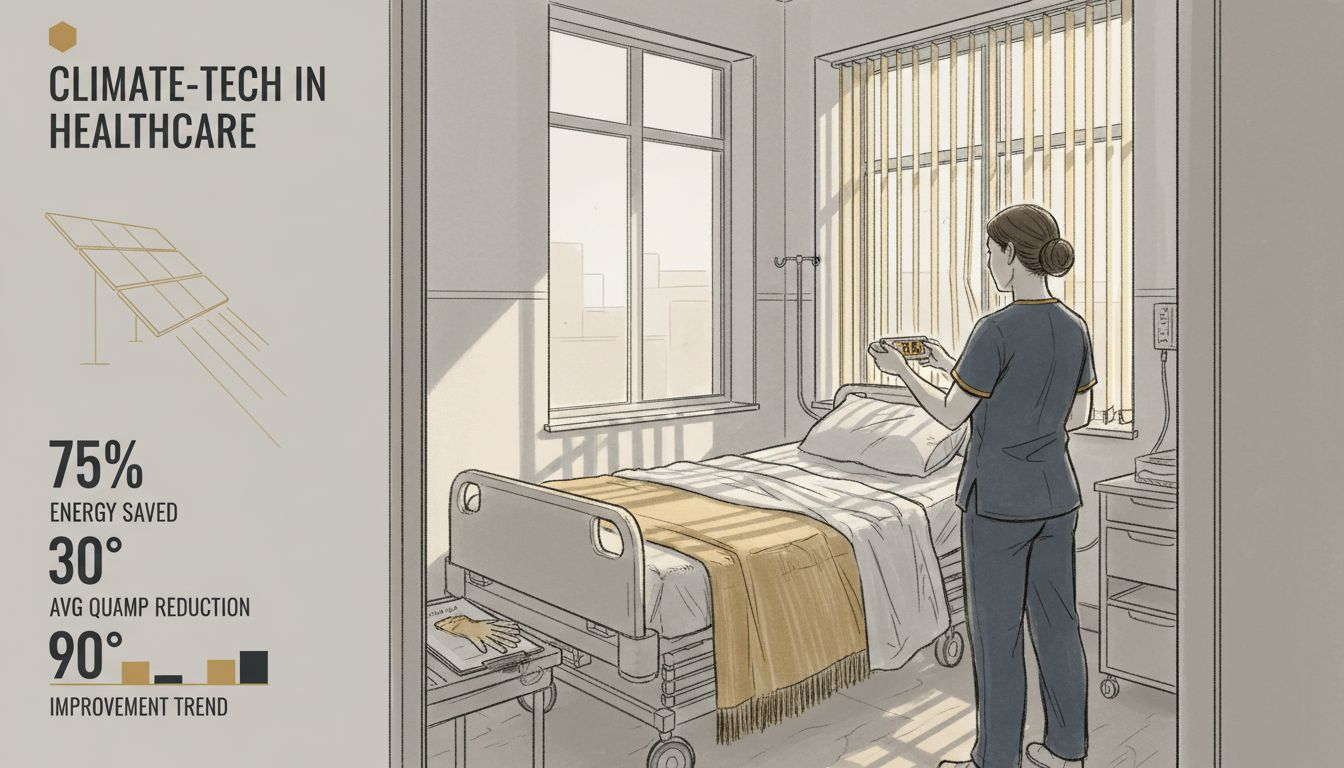
More than 40 percent of energy use in british hospitals comes from lighting and climate control, making sustainability not just a priority but a necessity. As pressure mounts to create healthier environments across Europe, administrators seek new ways to foster patient recovery and cut operational costs. Exploring sunlight redirection reveals advanced optical systems that promise brighter interiors, improved well-being, and significant savings without compromising care quality.
Table of Contents
Key Takeaways
Point | Details |
Sunlight Redirection Technology | This technology optimises indoor lighting by capturing and redistributing natural sunlight, significantly benefiting healthcare environments. |
Types of Systems | Sunlight redirection systems can be classified into passive and active types, each offering unique advantages for natural light optimisation. |
Benefits for Healthcare | Enhanced natural lighting improves patient recovery, reduces reliance on artificial lighting, and boosts energy efficiency in healthcare facilities. |
Financial and Environmental Impact | Implementing these systems can reduce energy costs, lower carbon emissions, and contribute to sustainable healthcare infrastructure. |
Defining Sunlight Redirection and Core Principles
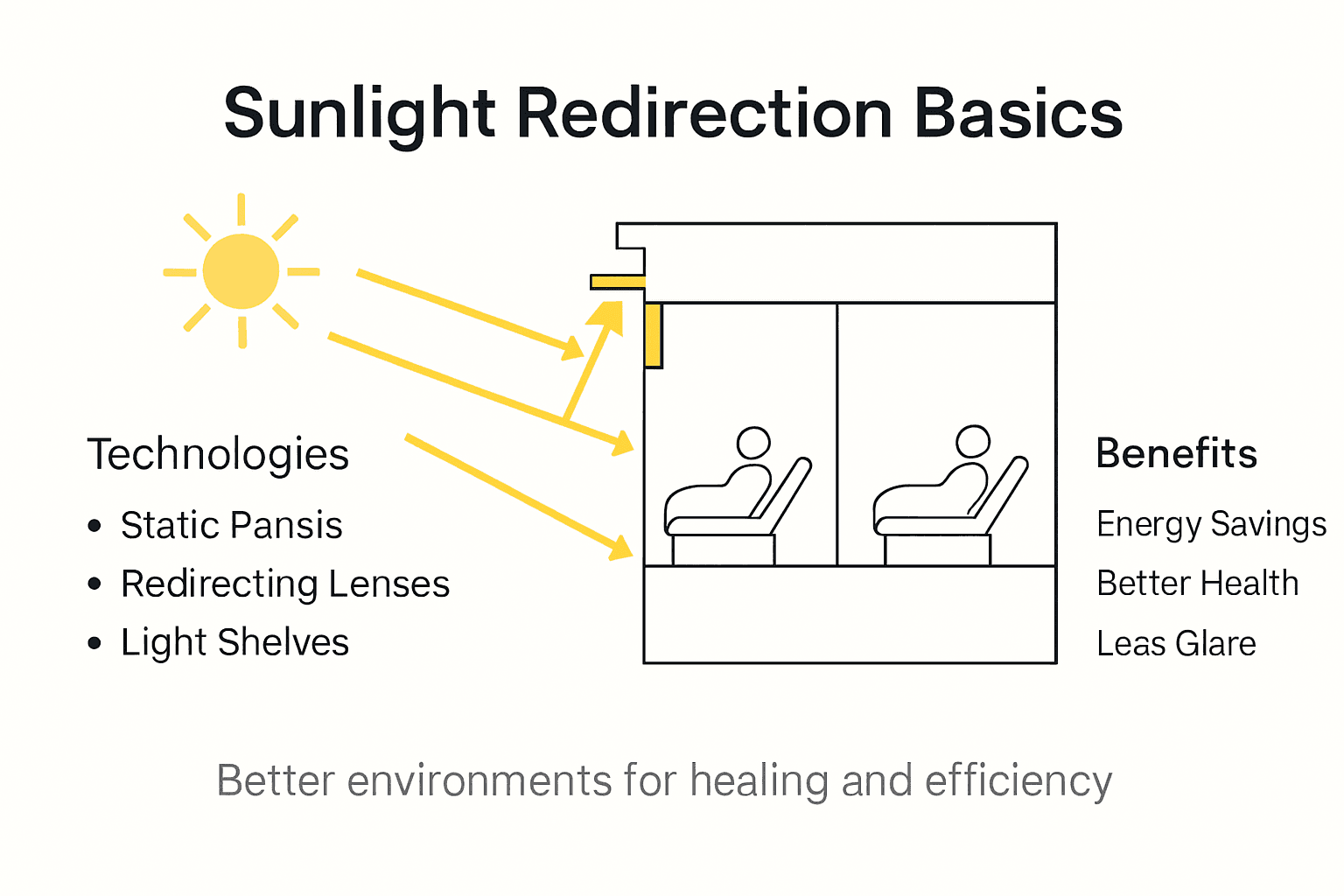
Sunlight redirection represents an innovative approach to optimising indoor lighting environments, particularly within healthcare settings. At its core, this technology involves capturing and strategically guiding natural sunlight deeper into interior spaces through precisely engineered optical systems. Advanced micro-structured components enable the transformation of direct sunlight, redirecting it towards interior zones that traditionally receive minimal natural illumination.
The fundamental principle behind sunlight redirection centres on capturing solar radiation at higher altitudes and intelligently redistributing that light energy across indoor environments. Active sunlight redirection systems utilise sophisticated mechanisms like movable mirrors and heliostatic configurations to track solar movements, ensuring consistent and dynamic light distribution. These systems are designed to provide uniform illumination while mitigating potential issues such as glare and excessive heat gain.
Healthcare facilities represent an ideal application for sunlight redirection technologies. By strategically redirecting both direct and diffuse sunlight, these systems can significantly enhance patient recovery environments. The technology offers multiple benefits, including:
Improved natural lighting penetration
Reduced dependency on artificial lighting
Enhanced energy efficiency
Better patient psychological well-being
Potential acceleration of healing processes
The adaptability of sunlight redirection systems across different latitudes and climatic conditions makes them a versatile solution for healthcare infrastructure design. By balancing technological innovation with physiological comfort, these systems represent a progressive approach to architectural lighting management.
Pro tip: When implementing sunlight redirection in healthcare environments, conduct comprehensive site-specific assessments to optimise panel placement and maximise natural light potential.
Types of Sunlight Redirection Systems
Sunlight redirection technologies encompass a diverse range of innovative systems designed to optimise natural illumination in healthcare environments. These systems can be broadly categorised into two primary classifications: passive and active redirection mechanisms, each offering unique approaches to capturing and distributing solar energy. Prismatic daylight redirecting systems represent a sophisticated passive technology that utilises precisely engineered prism shapes to manipulate sunlight trajectories.
Passive sunlight redirection systems typically incorporate fixed optical elements like prismatic panels, micro-structured glazing, and specialised glass treatments. These components are strategically designed to bend and redirect sunlight across specific angles, usually ranging from 15° to 65° solar altitudes. Sunlight redirection technologies vary significantly based on geographic location, climate considerations, and specific architectural requirements, allowing for highly customised solutions that address unique environmental challenges.
Active sunlight redirection systems represent a more dynamic approach, featuring sophisticated mechanisms such as:
Movable mirror configurations
Heliostatic tracking systems
Motorised panel arrangements
Computer-controlled solar guidance mechanisms
Adaptive optical elements
These advanced systems can dynamically adjust their orientation to maximise solar capture throughout different daylight periods, providing more flexible and responsive illumination strategies. By continuously tracking solar movements, active systems can maintain optimal light distribution while minimising potential issues like glare and heat gain.
Here’s a comparison of passive and active sunlight redirection systems for healthcare environments:
System Type | Key Mechanisms | Adaptability | Typical Applications |
Passive | Prismatic panels, micro-glazing | Fixed, climate dependent | Windows, skylights, facades |
Active | Movable mirrors, solar tracking | Adaptive, responsive | Deep interiors, dynamic areas |
Pro tip: When selecting a sunlight redirection system for healthcare facilities, carefully evaluate the specific architectural characteristics and geographic context to ensure optimal performance and energy efficiency.
How Reflective Panel Technologies Work
Reflective panel technologies represent a sophisticated approach to manipulating natural light within interior environments, particularly in healthcare settings. Light redirecting panels utilise complex principles of ray propagation, reflection, and refraction to strategically redistribute sunlight from high-altitude entry points towards previously shadowed or under-illuminated interior spaces. These advanced systems function as intelligent optical instruments, transforming how natural light interacts with architectural environments.
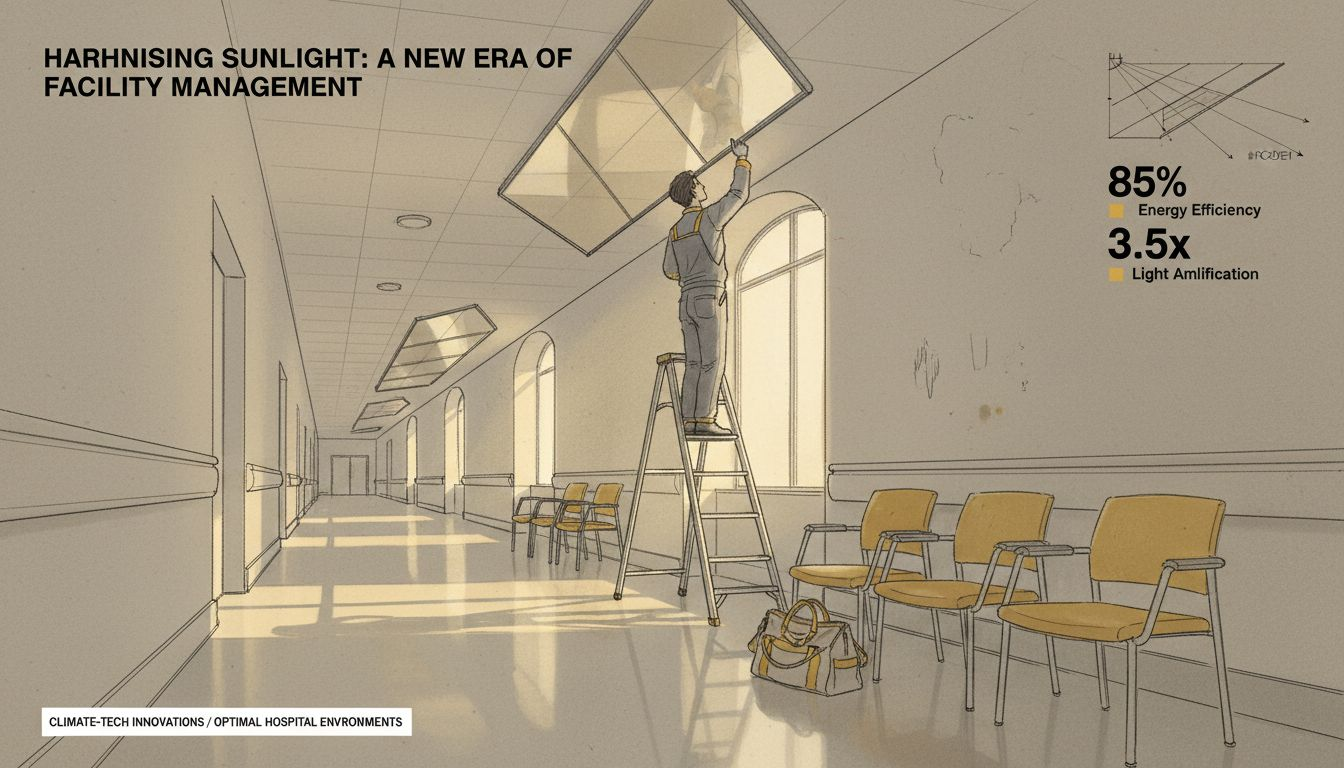
The core mechanism of reflective panel technologies involves precisely engineered optical surfaces designed to capture and redirect solar radiation with remarkable precision. Movable mirrors installed on light shelves track solar movements throughout the day, dynamically adjusting their orientation to maximise light penetration and distribution. These sophisticated systems can redirect sunlight through windows and architectural openings, creating uniform illumination while minimising potential issues like glare and heat accumulation.
Key technological components of reflective panel systems include:
Precision-engineered reflective surfaces
Solar tracking mechanisms
Adaptive optical elements
Advanced angle-calculation algorithms
Temperature and light intensity sensors
By intelligently capturing and redirecting natural light, these technologies offer multiple advantages beyond simple illumination. They contribute to energy efficiency, reduce artificial lighting requirements, and create more physiologically supportive interior environments. The ability to control and distribute sunlight scientifically represents a significant advancement in architectural design and environmental engineering.
Pro tip: Consult with optical engineering specialists to ensure your reflective panel configuration matches your specific architectural and geographic requirements.
Benefits for Healthcare: Recovery and Efficiency
Sunlight redirection systems in healthcare environments offer transformative benefits for patient recovery and operational efficiency, fundamentally reshaping how medical facilities approach healing and energy management. By strategically redirecting natural light deep into patient spaces, these innovative technologies support critical physiological processes, particularly the complex mechanisms of circadian rhythm regulation that play a crucial role in healing and patient well-being.
The physiological impact of enhanced natural lighting extends far beyond simple illumination. Daylight quality directly influences patient psychological and biological recovery processes, with research demonstrating significant improvements in stress reduction, mood stabilisation, and overall healing trajectories. Daylight redirection technologies in hospitals can provide high-quality natural light that aids healing and reduces potential infection risks, creating environments that actively contribute to patient recovery.
The efficiency benefits of sunlight redirection technologies are equally compelling for healthcare administrators and facility managers. These systems deliver multiple operational advantages:
Substantial reduction in electrical lighting costs
Decreased cooling system load
Enhanced sustainability profile
Improved staff productivity and well-being
Lower carbon footprint for healthcare facilities
By integrating advanced daylight management systems, healthcare environments can simultaneously address patient care requirements and organisational sustainability objectives. The holistic approach represents a sophisticated strategy that balances human-centric design with environmental responsibility, transforming medical spaces into adaptive, healing-oriented ecosystems.
This table summarises operational and health impacts of sunlight redirection technologies in hospitals:
Impact Area | Operational Benefit | Patient Outcome |
Energy Efficiency | Reduced lighting costs | Improved circadian regulation |
Staff Well-being | Enhanced natural workspace | Lower stress and fatigue |
Environmental | Smaller carbon footprint | Safer and sustainable healing |
Pro tip: Conduct comprehensive post-installation assessments to quantify both patient recovery metrics and energy efficiency gains from your sunlight redirection implementation.
Financial and Environmental Implications
Sunlight redirection systems represent a sophisticated investment strategy for healthcare facilities seeking to balance financial sustainability with environmental responsibility, offering a comprehensive approach to energy management that extends beyond traditional cost-saving measures. These innovative technologies provide a nuanced pathway to reducing operational expenses while simultaneously minimising carbon footprint, creating a compelling value proposition for forward-thinking healthcare administrators.
Energy efficiency emerges as a critical consideration in the financial calculus of sunlight redirection technologies. Active sunlight redirection systems contribute significantly to lowering building energy consumption for lighting and cooling, generating substantial economic advantages that vary based on specific architectural configurations and regional climatic conditions. The potential return on investment becomes particularly attractive when considering long-term operational savings and reduced reliance on fossil fuel-based electricity.
The environmental and financial implications of implementing sunlight redirection technologies can be summarised through several key metrics:
Potential reduction in electricity consumption by 30-50%
Significant decrease in artificial lighting requirements
Lowered carbon emissions
Reduced cooling system energy demands
Enhanced building sustainability ratings
Beyond immediate financial benefits, these systems contribute to broader environmental sustainability objectives, aligning healthcare infrastructure with progressive carbon reduction strategies. The holistic approach demonstrates how technological innovation can simultaneously address economic constraints and environmental responsibilities, transforming healthcare facilities into models of efficient, responsible design.
Pro tip: Conduct a comprehensive energy audit before implementation to accurately forecast potential financial and environmental gains specific to your healthcare facility’s unique characteristics.
Integrating Sunlight Redirection in Hospitals
Hospital design requires meticulous strategic planning when implementing sunlight redirection technologies, considering multiple complex factors that extend beyond simple architectural modifications. The integration process involves sophisticated calculations regarding patient room orientation, window design, and precise optical engineering to ensure optimal daylight distribution while maintaining patient comfort and privacy.
The technical implementation of sunlight redirection encompasses a multifaceted approach involving sophisticated optical components and architectural interventions. Hospitals can strategically combine heliostats, microstructured windows, and reflective panels to enhance daylight penetration in deep interior spaces, creating environments that simultaneously support patient healing and operational efficiency. These advanced systems require careful calibration to achieve balanced illumination without compromising thermal comfort or visual ergonomics.
Key considerations for successful hospital integration include:
Precise architectural assessment
Patient room orientation analysis
Glare control mechanisms
Advanced lighting control systems
Thermal comfort preservation
Adaptive optical panel configurations
Compliance with healthcare design standards
Successful implementation demands interdisciplinary collaboration between architects, lighting engineers, healthcare design specialists, and medical administrators. The goal transcends mere technological installation, focusing instead on creating healing environments that support patient recovery through intelligent, scientifically-designed natural illumination strategies.
Pro tip: Engage a multidisciplinary design team with specific expertise in healthcare lighting to ensure comprehensive and nuanced sunlight redirection system integration.
Enhance Healthcare Lighting with Advanced Sunlight Redirection Solutions
Healthcare facilities face critical challenges in delivering optimal natural light to patient rooms and staff areas while controlling glare, heat gain and energy consumption. This article highlights the importance of sunlight redirection using reflective panel technologies and adaptive systems to improve patient recovery, support circadian rhythms and reduce reliance on artificial lighting. Meeting these complex needs requires tailored approaches that combine precise optical engineering with environmental monitoring for maximum impact.
At LightMirror, we specialise in designing and implementing innovative sustainable lighting solutions specifically for healthcare environments. Our proprietary systems utilise advanced physics and AI algorithms to redirect sunlight deep into interiors, enhancing natural light exposure while lowering energy costs and carbon footprint. Discover how our projects like Healing Hill demonstrate measurable improvements in patient well-being, operational efficiency and compliance with green building standards. The future of hospital lighting optimisation starts here.
Ready to transform your healthcare facility with cutting-edge sunlight redirection technology? Explore our comprehensive services and expert guidance at LightMirror and learn from successful case studies such as the Saaremaa Lighthouse. Don’t wait to unlock the benefits of healthier spaces and sustainable energy savings. Contact us today to begin your journey towards a brighter, more efficient hospital environment.
Frequently Asked Questions
What is sunlight redirection in healthcare lighting?
Sunlight redirection is a technology that captures and guides natural sunlight deeper into indoor spaces, particularly in healthcare settings, using engineered optical systems to enhance natural lighting environments.
What are the benefits of using sunlight redirection systems in healthcare?
Sunlight redirection systems improve natural lighting penetration, reduce reliance on artificial lighting, enhance energy efficiency, support patient psychological well-being, and may accelerate healing processes.
How do active sunlight redirection systems differ from passive systems?
Active sunlight redirection systems utilise movable mirrors and tracking technologies to adjust the direction of light dynamically, while passive systems typically use fixed optical elements like prismatic panels to redirect light at set angles.
What factors should be considered when integrating sunlight redirection technologies in hospitals?
Key considerations include architectural assessments, patient room orientation, glare control mechanisms, thermal comfort, lighting control systems, and compliance with healthcare design standards.
Recommended
Comments