


Natural Light Exposure Methods for Healthcare Facilities
- Dimitri

- Jan 12
- 7 min read
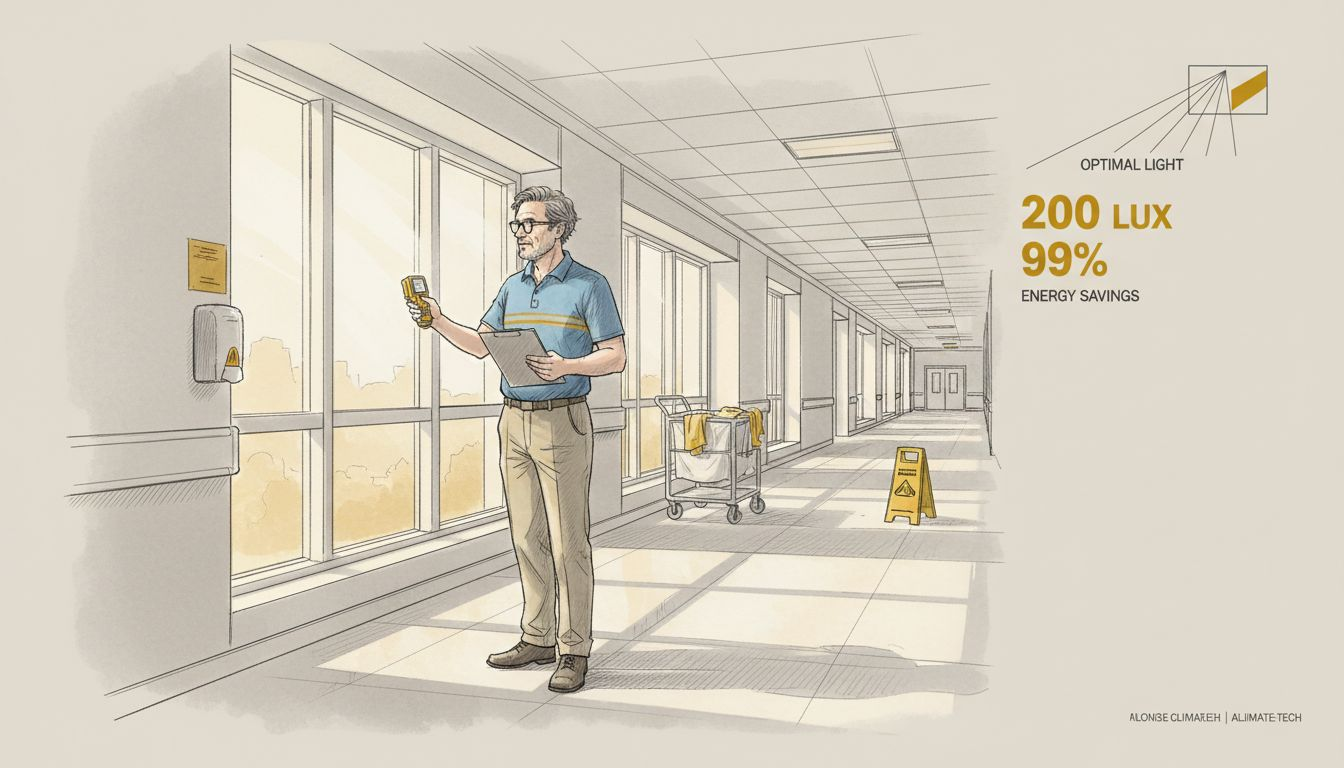
Nearly 60 percent of European hospitals still rely on artificial lighting for most daytime hours, impacting both energy bills and patient health. For British healthcare facility managers seeking to improve recovery outcomes and cut operational costs, integrating natural light offers a practical solution. This guide highlights actionable steps to optimize daylight exposure, from assessing current conditions to advanced smart control strategies that support well-being and sustainability.
Table of Contents
Quick Summary
Main Insight | Detailed Explanation |
1. Assess Natural Light | Evaluate current light conditions to identify improvement areas, enhancing patient recovery and staff well-being. |
2. Determine Light Entry | Identify optimal daylight entry points for maximum natural light, considering building design and orientation. |
3. Choose Reflective Tech | Select high-performance reflective technologies to enhance daylight distribution and improve comfort in spaces. |
4. Integrate Light Control | Implement smart light control systems for dynamic adjustment and enhanced lighting conditions tailored to user needs. |
5. Verify and Adjust | Regularly evaluate daylight impact on performance and make necessary adjustments for optimal results. |
Step 1: Assess Current Light Conditions
Assessing the current light conditions in your healthcare facility represents a critical first step towards optimising natural daylight exposure. This evaluation helps you understand existing lighting performance and identify potential areas for improvement, which can significantly impact patient recovery and staff well-being.
To conduct a comprehensive light assessment, you will need to systematically examine multiple aspects of your facility’s lighting environment. Begin by performing a detailed spatial analysis that evaluates daylight performance across different room types, paying special attention to patient rooms, corridors, and common areas. Use professional light measurement tools like lux metres to quantify existing natural light levels throughout the day. Document illuminance readings at different times and locations, noting variations caused by window placement, building orientation, and seasonal changes.
Photographic documentation and digital mapping can provide visual evidence of light distribution, helping you create a comprehensive baseline for future improvements. Consider engaging a lighting consultant who can perform advanced assessments using specialised equipment and provide detailed recommendations tailored to your specific healthcare environment.
Expert Tip: Conduct your light assessment during multiple times of day to capture the full range of natural lighting variations and understand how sunlight patterns change across different seasons.
Step 2: Identify Optimal Daylight Entry Points
Identifying optimal daylight entry points is crucial for creating healing environments that maximise natural light and improve patient well-being. This strategic process involves carefully examining your healthcare facility’s architectural characteristics and potential light infiltration opportunities.
Begin by conducting a comprehensive analysis of your building’s facade and orientation. Simulate daylight penetration strategies using advanced parametric modelling techniques that assess how sunlight interacts with different architectural configurations. Pay close attention to window placement, room depth, and potential obstructions that might limit natural light transmission. Consider factors such as building height, surrounding landscape, and seasonal sun angle variations that can significantly impact daylight availability.
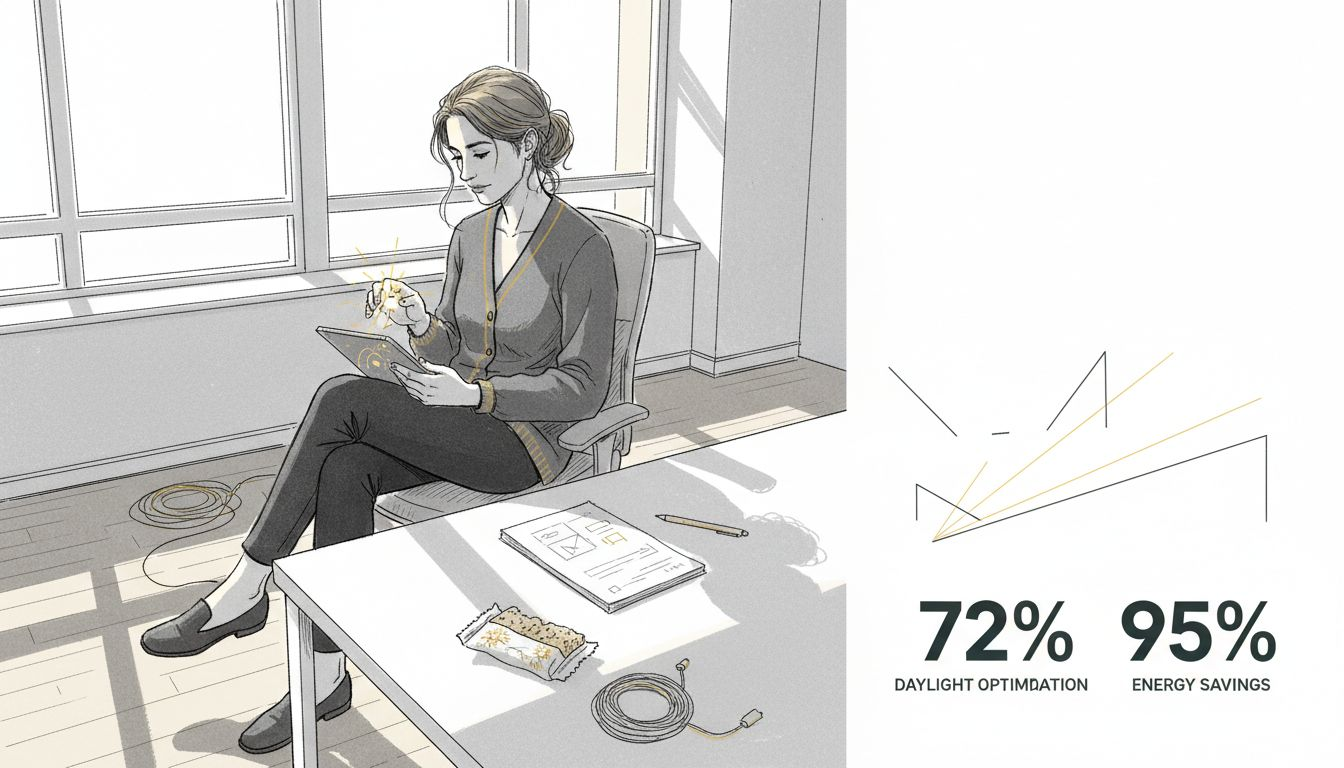
Utilise professional architectural tools and digital simulation software to map potential light entry points systematically. These technologies can help you visualise how different design interventions might enhance natural illumination across patient rooms, corridors, and communal spaces. Look specifically for opportunities to integrate courtyard designs, light wells, and strategically positioned transparent surfaces that can maximise daylight penetration while maintaining visual comfort.
Expert Tip: When mapping daylight entry points, create a comprehensive sun path diagram for your specific geographical location to understand precise sunlight dynamics throughout the year.
Step 3: Select Suitable Reflective Technology
Selecting the appropriate reflective technology is a critical step in maximising natural light distribution throughout your healthcare facility. Your goal is to choose materials and systems that effectively capture, redirect, and diffuse daylight to create optimal healing environments.
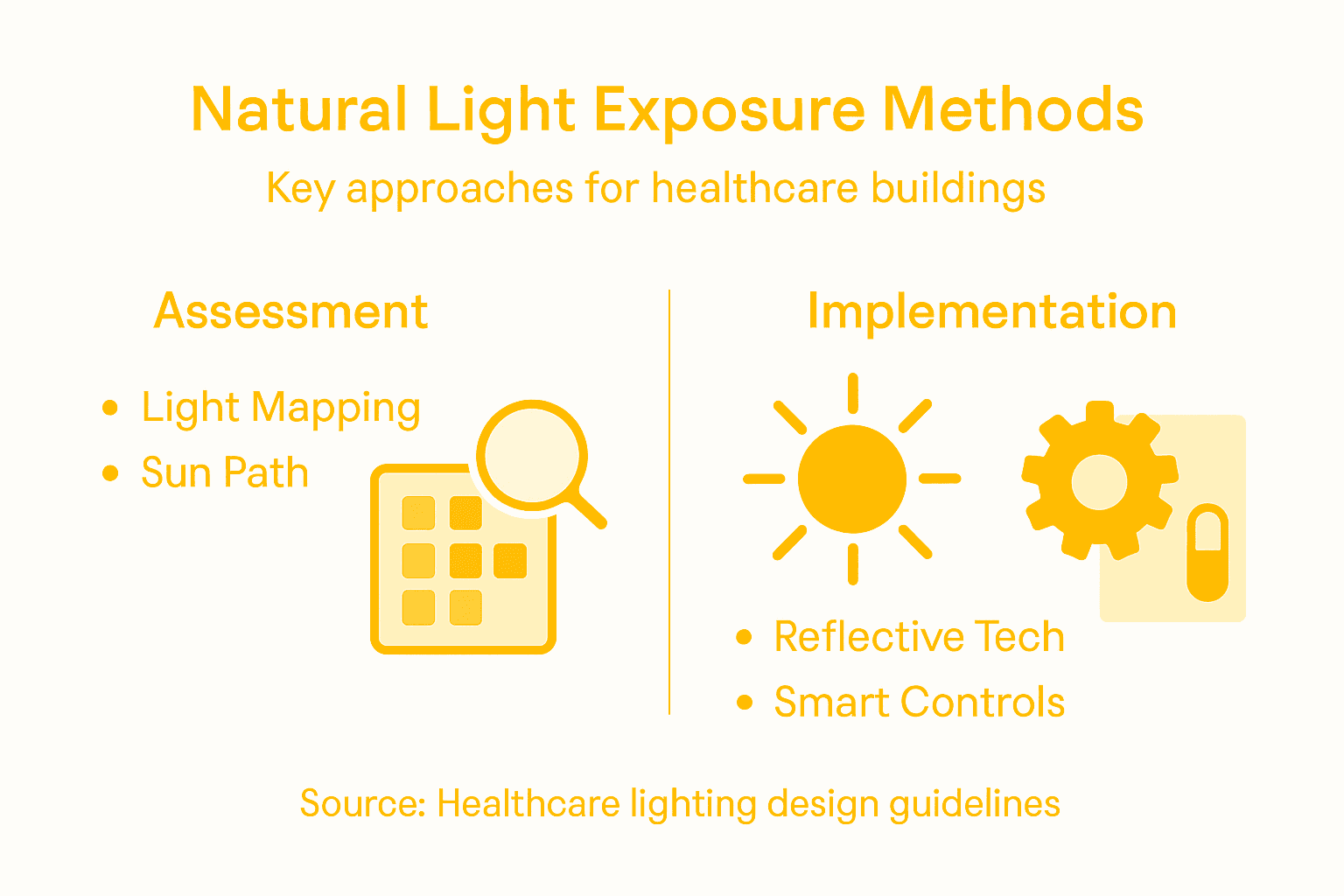
Carefully evaluate reflective technologies by considering their performance characteristics and ability to enhance lighting design elements that support patient well-being. Look for advanced materials with high light reflectance properties such as microprismatic panels, specular metallic surfaces, and smart glass technologies that can dynamically adjust light transmission. Assess each technology’s capacity to reduce glare, provide uniform light distribution, and maintain thermal efficiency. Key selection criteria should include reflectance percentage, diffusion capabilities, durability, ease of maintenance, and compatibility with existing architectural structures.
Consult with lighting design specialists and materials engineers who can provide detailed recommendations tailored to your specific facility layout. Consider performing mock-up installations and comparative studies to validate the performance of different reflective technologies under real-world conditions. Your selection should balance technical performance with aesthetic considerations that contribute to a healing and comfortable environment.
Expert Tip: Request performance data and independent testing reports from reflective technology manufacturers to verify their claims about light distribution and energy efficiency.
Here is a summary of key considerations when selecting reflective technologies for healthcare facilities:
Technology Type | Reflectance (%) | Main Benefit | Typical Application |
Microprismatic Panels | 80-95 | Enhance diffused daylight | Ceilings, window panels |
Specular Metallic Films | 85-98 | Strong directional reflection | Glazing, wall coverings |
Smart Glass | Variable (60-90) | Dynamic light control | Façades, partitions |
High-reflectance Paint | 70-90 | Cost-effective light spread | Walls, ceilings |
Step 4: Integrate Systems for Smart Light Control
Integrating intelligent light control systems transforms your healthcare facility’s lighting environment, enabling precise management of natural and artificial illumination. This sophisticated approach allows you to create responsive lighting solutions that adapt dynamically to patient needs and environmental conditions.
Begin by implementing smart lighting control technologies that support circadian rhythm synchronisation and operational flexibility. Select systems with advanced features such as daylight responsive sensors, presence detection capabilities, and programmable scene settings that can automatically adjust light intensity and colour temperature throughout different times of day. These intelligent systems should integrate seamlessly with your existing architectural infrastructure, providing granular control over lighting zones in patient rooms, corridors, treatment areas, and administrative spaces.
Consult with specialised healthcare lighting engineers to design a comprehensive control strategy that balances technical performance with user experience. Prioritise solutions that offer intuitive interfaces for staff, enable remote monitoring, and provide detailed energy consumption analytics. Your integrated system should support multiple control methods including smartphone apps, wall mounted panels, and centralised management interfaces that allow real time adjustments and performance tracking.
Expert Tip: Conduct thorough staff training to ensure effective utilisation of your new smart lighting control systems and maximise their potential benefits.
Step 5: Verify Daylight Efficacy and Adjust
Verifying the effectiveness of your daylight interventions is crucial for ensuring optimal natural light performance in your healthcare facility. This systematic evaluation will help you fine tune your lighting strategies to maximise patient comfort and energy efficiency.
Begin by conducting comprehensive daylight performance evaluations using specialised measurement tools and established performance metrics. Use illuminance metres to quantify light levels across different spaces, recording readings at various times of day and under different seasonal conditions. Pay close attention to key parameters such as light intensity, uniformity, glare potential, and colour temperature. These measurements will provide objective data about how effectively your current daylight systems are performing and highlight areas requiring potential adjustments.
Engage professional lighting consultants who can perform detailed parametric simulations and provide nuanced recommendations for improvement. They can help you analyse complex interactions between architectural elements, reflective technologies, and natural light penetration. Your verification process should be iterative, involving regular assessments that track changes in lighting performance and their impact on patient well-being, staff productivity, and overall facility energy consumption.
Expert Tip: Establish a systematic documentation process to track your daylight performance metrics over time, enabling data driven decision making for continuous improvement.
The following table compares key steps for daylight performance evaluation in healthcare:
Assessment Step | Tool/Method Used | Typical Outcome |
Measure illuminance | Lux metre | Quantified light levels |
Assess light distribution | Digital mapping | Identification of dark spots |
Evaluate glare potential | Simulation software | Glare risk assessment |
Track seasonal sunlight patterns | Sun path diagrams | Understanding annual trends |
Enhance Natural Light Exposure in Healthcare Facilities Today
Maximising natural light in healthcare settings plays a vital role in improving patient recovery and staff well-being while reducing operational costs. If your facility faces challenges such as uneven daylight distribution or inefficient light control systems, innovative reflective technologies and smart daylight management strategies can offer effective solutions. At LightMirror, we specialise in harnessing advanced reflective panels that redirect natural sunlight deep into interiors. This supports goals highlighted in the article like optimised daylight entry points, enhanced light diffusion, and integrated smart control systems.
Explore how our proprietary system, featured in collections like Calming sand | LightMirror 2023, aligns with your ambition to reduce artificial lighting and energy consumption while promoting a healthier environment. Take the next step to transform your healthcare facility by visiting LightMirror’s homepage and discover tailored solutions designed to complement your daylight optimisation methods. Act now to benefit from sustainable natural lighting innovations that create better healing spaces and support your green building commitments.
Frequently Asked Questions
How can I assess the current light conditions in my healthcare facility?
To assess current light conditions, begin by performing a detailed spatial analysis of various room types. Use light measurement tools to quantify natural light levels throughout the day, documenting illuminance readings and variations caused by factors like window placement and building orientation.
What are optimal daylight entry points to consider for healthcare facilities?
Optimal daylight entry points involve examining your building’s facade and orientation to identify how sunlight can best penetrate the spaces. Pay attention to window placement and potential obstructions, utilising architectural analysis tools to maximise natural light in patient rooms and common areas.
What types of reflective technologies should I consider for maximising natural light?
When selecting reflective technologies, opt for materials with high light reflectance, such as microprismatic panels and smart glass. Evaluate their performance in terms of glare reduction and uniform light distribution to ensure that they effectively enhance the lighting environment.
How can I integrate systems for smart light control in my facility?
To integrate smart light control systems, choose technologies that adaptively manage natural and artificial lighting based on real-time conditions. Implement sensors for daylight responsiveness and presence detection to allow for programmable light settings across different areas of the facility.
What steps should I take to verify the effectiveness of daylight in my healthcare facility?
To verify daylight effectiveness, conduct thorough evaluations using illuminance metres throughout various spaces at different times. Track parameters like light intensity and glare potential while documenting the data to inform necessary adjustments, ensuring optimal performance over time.
How do architectural factors influence natural light exposure in healthcare settings?
Architectural factors such as building orientation, window placement, and room depth significantly influence natural light exposure. Assess these elements meticulously to identify how they affect light availability and patient well-being in your facility.
Recommended
Comments