


Role of Reflective Panels in Healthcare Lighting
- Dimitri

- Jan 1
- 7 min read
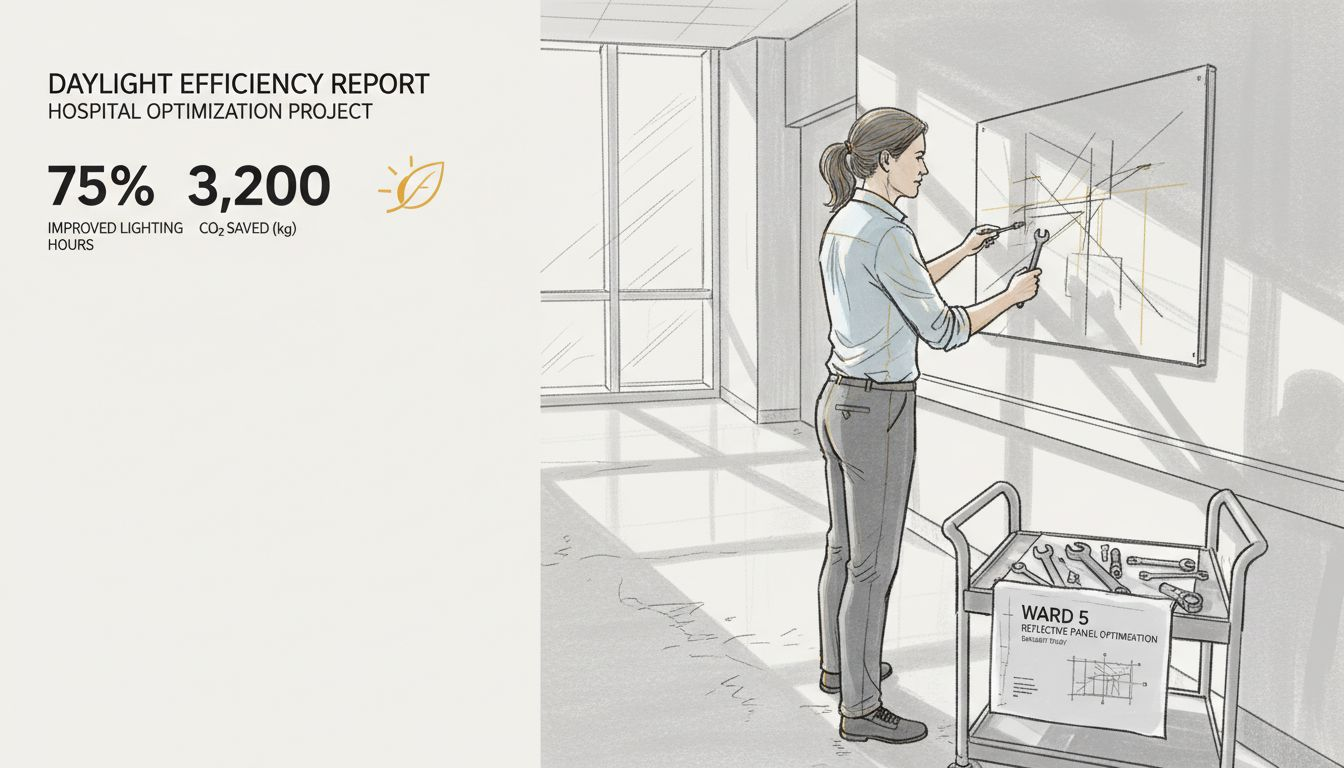
More than 40% of British healthcare facilities report high energy costs linked to outdated lighting solutions. For hospital managers across Europe, natural daylight is not just about aesthetics—it directly affects patient recovery and operational budgets. This article highlights how reflective panels use advanced materials to transform gloomy wards into brighter, healthier environments, all while lowering electricity consumption and supporting sustainable building goals.
Table of Contents
Key Takeaways
Point | Details |
Optimised Light Distribution | Reflective panels maximise natural daylight in healthcare environments, enhancing interior lighting quality and reducing reliance on artificial lighting. |
Energy Efficiency | These panels can lead to significant energy savings, potentially reducing electrical consumption by up to 70% in daylight hours. |
Patient Well-being | The strategic use of reflective panels supports patient recovery through improved natural light exposure, benefiting mental and physical health. |
Sustainability Advantages | Reflective panel technologies contribute to decreasing carbon emissions and align with green building standards, promoting a more sustainable healthcare infrastructure. |
Defining Reflective Panels and Their Role
Reflective panels are sophisticated architectural elements designed to strategically redirect and optimise natural daylight within healthcare environments. These precision-engineered surfaces capture incoming sunlight and mathematically redistribute it across interior spaces, transforming traditional lighting approaches in medical facilities. By leveraging advanced optical principles, reflective panels create uniform illumination that supports patient recovery and staff productivity.
The core functionality of reflective panels involves capturing sunlight at specific angles and redirecting it deep into interior spaces where conventional windows cannot effectively penetrate. This process utilises highly specialised surface materials with precise reflectivity properties, often incorporating micro-engineered textures that can guide light with remarkable precision. Natural light optimisation steps for healthcare spaces demonstrate how these innovative panels can dramatically enhance interior lighting quality without increasing thermal load or energy consumption.
Healthcare environments demand nuanced lighting solutions that balance patient comfort, staff performance, and energy efficiency. Reflective panels address these complex requirements by providing dynamic light distribution that mimics natural daylight patterns. Their strategic placement allows medical facilities to reduce artificial lighting needs, create more healing-oriented environments, and significantly lower electricity consumption. Modern reflective panel technologies can redirect up to 85% of incoming sunlight, transforming previously underlit or dark interior zones into bright, welcoming spaces.
Pro tip: When selecting reflective panels for healthcare settings, prioritise panels with adjustable reflectivity and microsurface texturing to maximise light redirection efficiency and adaptability.
Main Types and Technological Variations
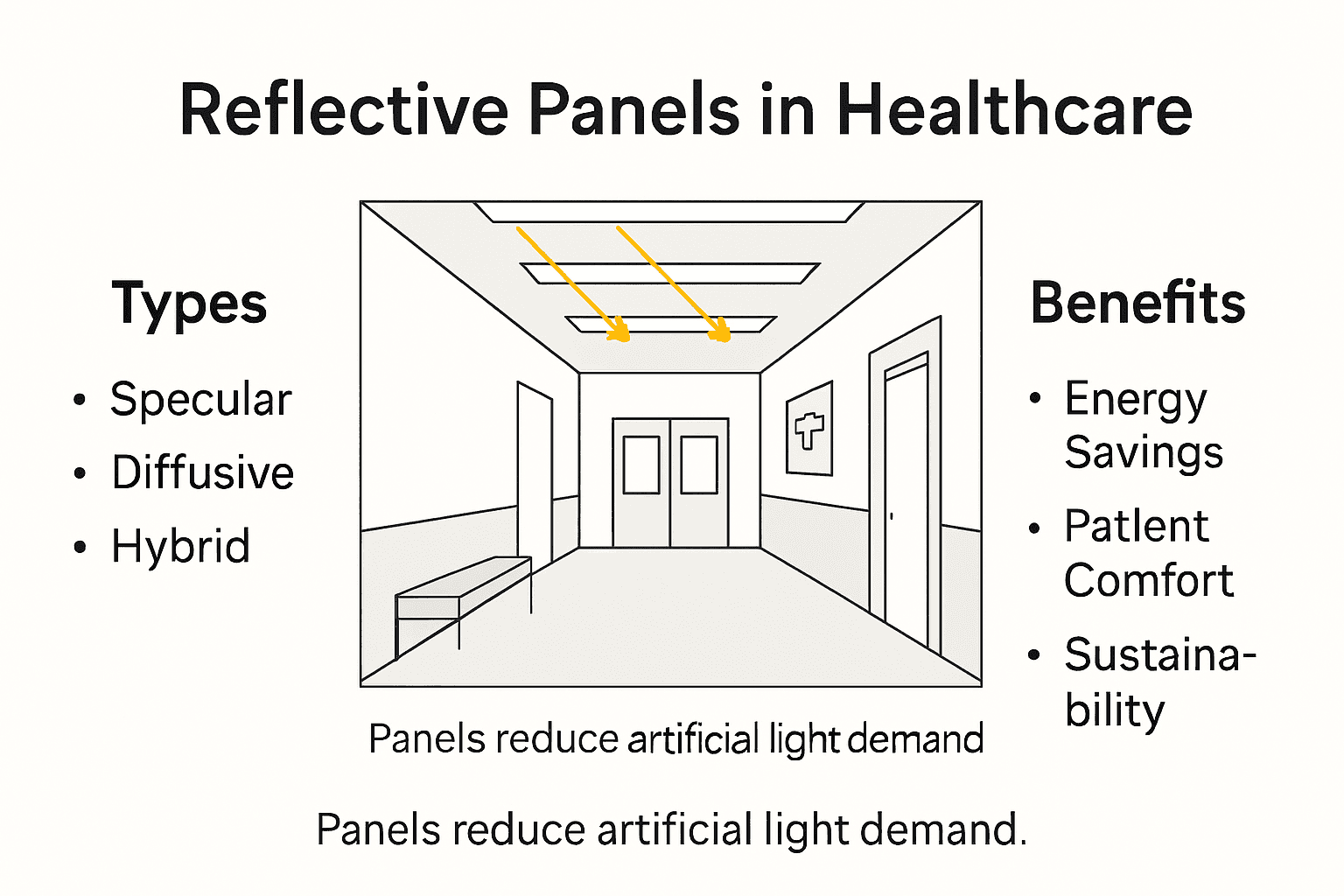
Reflective panels in healthcare lighting environments feature diverse technological approaches, each designed to address specific architectural and performance requirements. Primary panel categories include specular reflective surfaces, diffusive panels, and advanced hybrid systems that combine multiple light manipulation techniques. Technological variations in reflective panel configurations demonstrate the complexity and innovation within this emerging field of architectural lighting design.
The first major category encompasses specular reflective panels, which utilise highly polished metallic or glass-like surfaces to provide precise, directional light redirection. These panels employ mathematical angle calculations to reflect sunlight with minimal dispersion, enabling targeted illumination of specific interior zones. Diffusive panels represent an alternative approach, featuring textured surfaces that scatter incoming light more uniformly across wider areas, creating softer, more ambient lighting conditions ideal for patient recovery spaces.
Hybrid reflective panel technologies represent the most sophisticated segment of healthcare lighting solutions. These advanced systems integrate multiple functional capabilities, including dynamic light tracking, thermal management, and even integrated photovoltaic elements for energy generation. Innovative microsurface texturing allows these panels to adapt light transmission characteristics in real-time, responding to changing environmental conditions and optimising interior illumination throughout different times of day.
Below is a summary table highlighting the main types of reflective panels used in healthcare environments and their core characteristics:
Panel Type | Light Distribution | Main Materials | Suitable Application |
Specular | Precise, directional | Highly polished metal, glass | Targeted lighting zones |
Diffusive | Uniform, ambient | Textured glass, polymers | Patient recovery areas |
Hybrid Technologies | Adaptive and dynamic | Composite layers, photovoltaic | Flexible, multi-zone spaces |
Pro tip: When evaluating reflective panel technologies for healthcare facilities, conduct comprehensive performance simulations that assess light distribution, thermal efficiency, and potential energy savings across different architectural configurations.
How Reflective Panels Optimise Daylighting
Reflective panels represent a sophisticated solution for optimising natural daylighting in healthcare environments, transforming traditional approaches to interior illumination. By strategically capturing and redirecting sunlight, these innovative systems ensure that interior spaces receive maximum natural light penetration, dramatically improving the quality and distribution of daylight across complex architectural layouts. How to maximise daylight in healthcare facilities demonstrates the critical importance of intelligent light redirection in creating healing-oriented spaces.
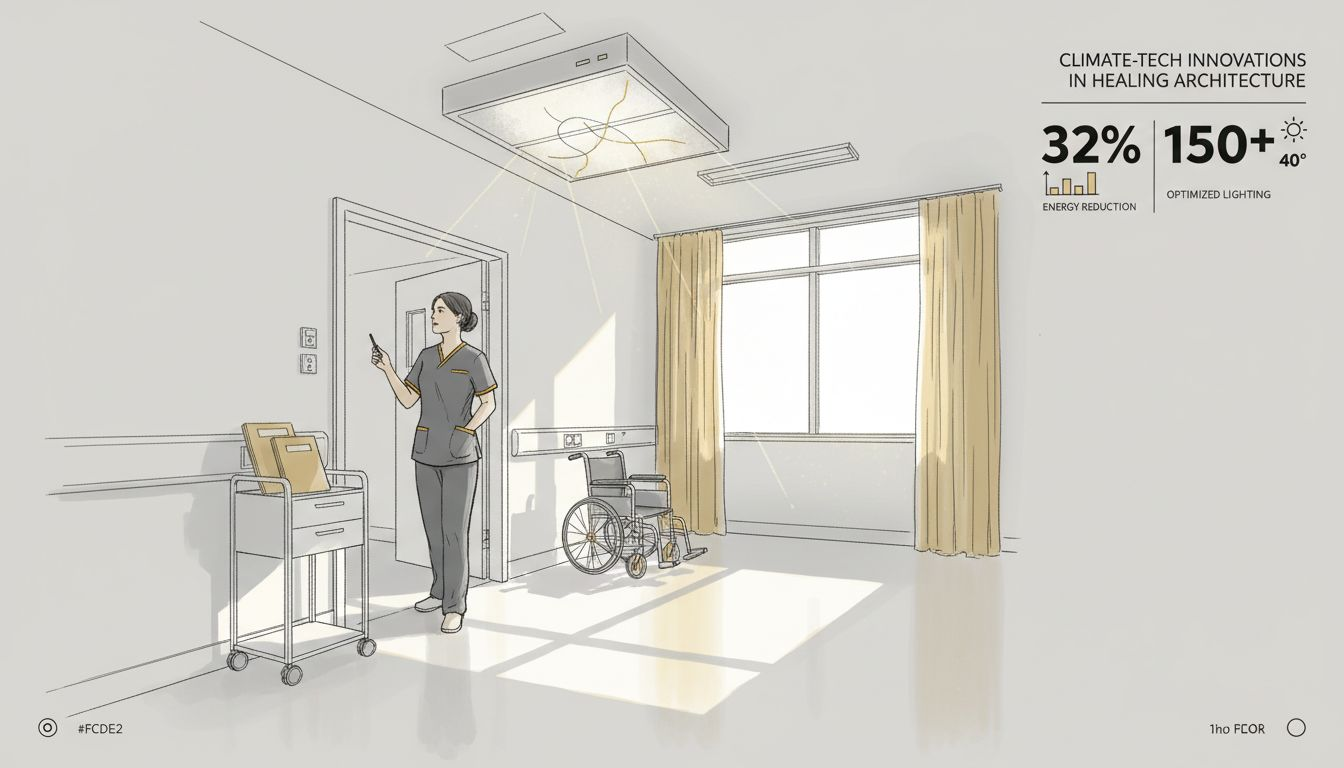
The optimisation process begins with precise geometric calculations that analyse incoming sunlight angles, surface reflectivity, and interior spatial configurations. Reflective panels utilise advanced optical principles to capture sunlight at optimal angles, redirecting it deep into interior zones that traditional windows cannot effectively illuminate. This approach goes beyond simple light transmission, creating a dynamic lighting environment that mimics natural daylight patterns and provides consistent, uniform illumination throughout medical facilities.
Healthcare environments benefit significantly from these advanced daylighting techniques, as optimised natural light directly impacts patient recovery, staff productivity, and overall well-being. Reflective panels can reduce shadows, eliminate harsh light variations, and create a more consistent luminous environment that supports circadian rhythms and promotes healing. By minimising reliance on artificial lighting, these systems also contribute to substantial energy savings, with some installations demonstrating up to 70% reduction in electrical lighting requirements during daylight hours.
Pro tip: Conduct comprehensive lighting simulations that map exact sunlight trajectories and panel placement to maximise daylight penetration and uniformity in healthcare interior spaces.
Energy Savings and Sustainability Benefits
Reflective panels represent a transformative approach to sustainable healthcare infrastructure, offering unprecedented opportunities for energy conservation and environmental responsibility. By strategically redirecting natural light, these innovative systems dramatically reduce reliance on artificial lighting and heating, generating significant ecological and economic advantages. Energy-saving lighting strategies for healthcare facilities highlight the critical role of intelligent daylighting technologies in modern medical environments.
The sustainability impact of reflective panels extends far beyond immediate energy reduction. Architecture of sustainable reflective panel technologies demonstrates how these systems contribute to comprehensive greenhouse gas reduction strategies. By minimising electrical lighting consumption and optimising thermal management, healthcare facilities can potentially reduce carbon emissions by up to 40%, aligning with stringent international environmental standards and green building certifications like BREEAM and LEED.
Beyond direct energy savings, reflective panels create substantial secondary sustainability benefits. Their ability to enhance natural light exposure supports patient healing processes, reduces artificial lighting requirements, and creates more environmentally responsive healthcare spaces. Advanced panel technologies can integrate photovoltaic elements, further extending their ecological potential by generating renewable energy while simultaneously optimising interior illumination. These multifunctional systems represent a holistic approach to sustainable healthcare infrastructure, transforming medical facilities from energy consumers to potential energy producers.
The following table compares business impacts of reflective panels on healthcare facility outcomes:
Impact Area | Reflective Panels Contribution | Potential Business Benefit |
Energy Consumption | Reduces artificial lighting reliance | Lower operating costs |
Patient Well-being | Enhances natural light exposure | Improved recovery rates |
Sustainability | Minimises carbon emissions | Compliance with green standards |
Facility Flexibility | Adaptable to retrofits and new builds | Faster adaptation to evolving needs |
Pro tip: Conduct comprehensive energy audits that quantify potential carbon reductions and financial savings when implementing reflective panel technologies in healthcare settings.
Integrating Panels Into Healthcare Environments
Successful integration of reflective panels into healthcare environments requires a comprehensive approach that combines precise technological implementation with nuanced architectural considerations. Why optimise natural light in healthcare design underscores the critical importance of strategic panel placement and performance evaluation. Healthcare facilities must approach panel integration as a multidisciplinary process involving architects, lighting engineers, and medical professionals to ensure optimal outcomes.
Architecture of sustainable reflective panel technologies reveals that successful implementation involves sophisticated software modeling to determine ideal panel positioning. This process includes detailed assessments of building orientation, existing light pathways, patient care areas, and potential thermal implications. Advanced computational tools enable precise simulation of light trajectories, ensuring panels redirect sunlight without creating glare, excessive heat, or uncomfortable lighting conditions that might disrupt patient recovery environments.
The integration strategy extends beyond technical installation, encompassing comprehensive staff training and ongoing performance monitoring. Healthcare facilities must develop protocols for panel maintenance, calibration, and periodic performance assessment. This holistic approach ensures that reflective panel systems continue to deliver optimal lighting quality, energy efficiency, and patient comfort over extended periods. Panels are designed to seamlessly complement existing architectural structures, whether implemented in new constructions or retrofitted into established medical facilities, providing flexible solutions tailored to unique institutional requirements.
Pro tip: Conduct comprehensive pre-installation light mapping and post-implementation performance assessments to validate the effectiveness of reflective panel integration in healthcare environments.
Transform Healthcare Lighting with Advanced Reflective Panels
Reflective panels provide a critical solution to healthcare lighting challenges by optimising natural daylight to enhance patient recovery and staff well-being while drastically reducing energy consumption. This article highlights the need for precise light redirection, uniform illumination, and sustainable infrastructure in healthcare environments. At LightMirror, we specialise in innovative reflective panel systems that harness advanced physics, AI algorithms and environmental monitoring to solve exactly these challenges. Our approach delivers uniform, healing-oriented daylight customised for complex medical spaces, helping reduce reliance on artificial lighting and align with green building standards.
Explore our Healing Hill | LightMirror 2023 collection to experience cutting-edge reflective panel solutions tailored for healthcare interiors. Ready to elevate your facility’s lighting quality and sustainability credentials? Visit https://light-mirror.eu for comprehensive services including feasibility studies, custom installations and ongoing support. Don’t wait to transform your healthcare environment with natural light that truly supports healing and operational efficiency—contact us today to start your daylight optimisation project.
Frequently Asked Questions
What are reflective panels and how do they function in healthcare lighting?
Reflective panels are architectural elements designed to capture and redirect natural daylight within healthcare environments. They utilise specialised materials to optimally redistribute sunlight across interior spaces, enhancing lighting quality and supporting patient recovery.
What types of reflective panels are available for healthcare use?
The primary types of reflective panels include specular reflective surfaces for targeted light direction, diffusive panels for uniform ambient lighting, and hybrid technologies that combine multiple functionalities for adaptive lighting solutions.
How do reflective panels contribute to energy savings in healthcare facilities?
Reflective panels reduce reliance on artificial lighting by optimising natural light penetration, leading to lower electricity consumption. Some installations can demonstrate up to a 70% reduction in electrical lighting requirements during daylight hours, contributing to significant cost savings and sustainability benefits.
What factors should be considered when integrating reflective panels into healthcare environments?
When integrating reflective panels, it is essential to evaluate building orientation, existing light pathways, and patient care areas. Comprehensive performance assessments and simulations can ensure effective panel placement that maximises natural light without causing glare or discomfort.
Recommended
Comments