


Reflective Panels: Transforming Hospital Daylight
- Dimitri

- Dec 27, 2025
- 8 min read
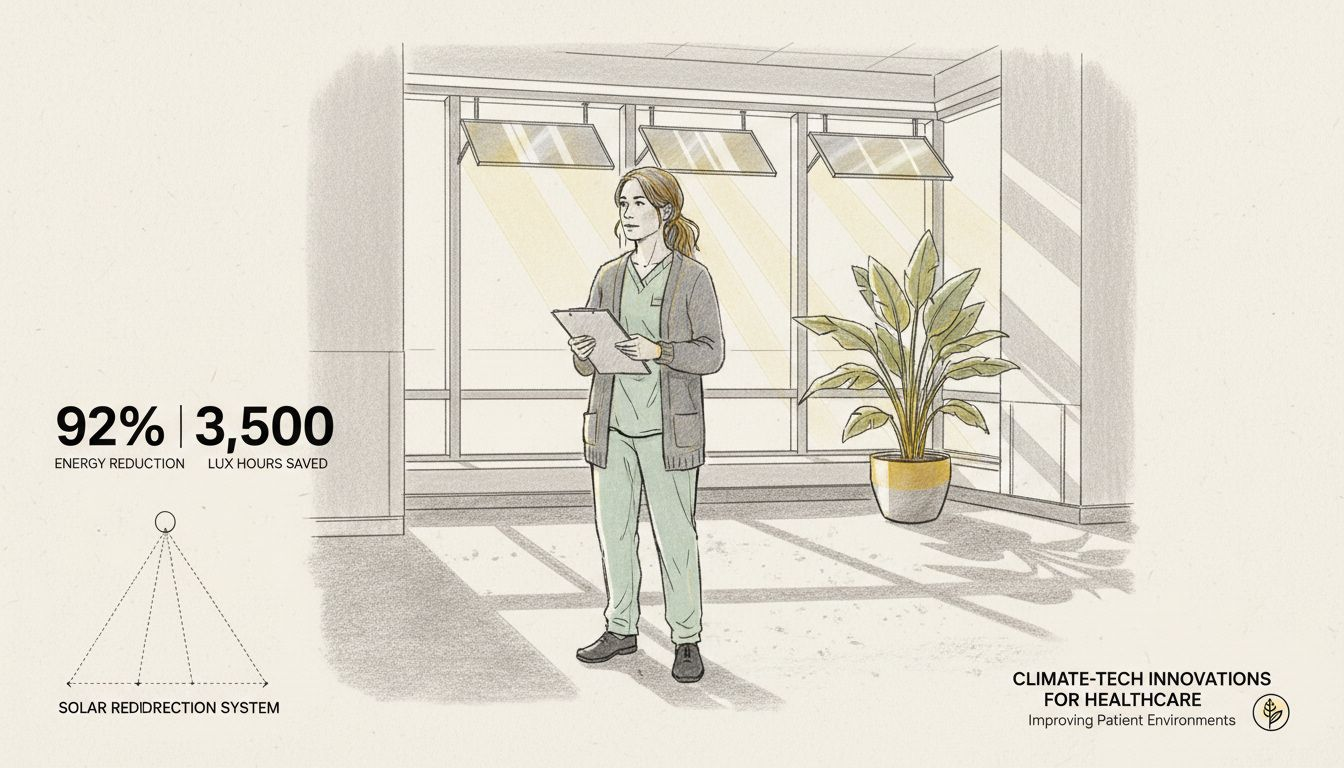
Over 40% of British hospitals report ongoing challenges with maintaining bright, therapeutic spaces while keeping energy budgets under control. Healthcare facility managers across Europe understand how crucial balanced lighting is for patient recovery and overall well-being. This guide explores how reflective panel technology can transform clinical spaces by delivering consistent natural light and cutting energy costs in even the most complex hospital layouts.
Table of Contents
Key Takeaways
Point | Details |
Innovative Lighting Solution | Reflective panels enhance natural daylight distribution in healthcare environments, improving overall illumination and ambience. |
Patient Well-being Benefits | Implementing reflective panels can lead to faster patient recovery times and improved staff morale. |
Energy Efficiency | The use of reflective panels significantly lowers electricity consumption, with potential savings of 30-50% in lighting costs. |
Integration Considerations | Successful installation involves careful planning and collaboration among architects and healthcare professionals to optimise panel performance. |
What Are Reflective Panels in Healthcare?
Reflective panels represent an innovative architectural solution designed to transform natural daylight distribution within healthcare environments. These sophisticated technological systems capture, redirect, and amplify sunlight, strategically channelling illumination into areas traditionally challenged by limited natural light access. By utilising advanced optical engineering principles, reflective panels create a dynamic lighting ecosystem that goes beyond traditional window placement.
At their core, these panels function through precision-engineered surfaces that capture incoming sunlight and mathematically redirect light waves into interior spaces. Unlike standard windows or skylights, reflective panels can dynamically adjust light transmission based on environmental conditions, ensuring consistent, balanced illumination throughout hospital corridors, patient rooms, and treatment areas. The technology involves intricate geometric designs that capture sunlight at multiple angles, maximising light penetration without generating excessive heat or glare.
Healthcare facilities benefit significantly from reflective panel technology through multiple dimensions. These systems not only provide superior illumination but also contribute to improved patient recovery environments, reduced energy consumption, and enhanced staff well-being. The panels can redirect sunlight deep into building interiors, reducing dependence on artificial lighting and creating more naturalistic healing spaces. Hospitals implementing these systems often observe measurable improvements in patient mood, reduced recovery times, and substantial reductions in electricity expenditure.
Pro tip: When considering reflective panel installation, consult specialists who can conduct comprehensive light mapping to ensure optimal panel placement and maximum daylight efficiency.
Types and Core Characteristics Explained
Reflective panels in healthcare settings are categorised into several sophisticated technological designs, each engineered to address specific architectural and illumination challenges. Daylighting systems demonstrate complex optical engineering principles that enable precise light manipulation through various panel configurations and material compositions.
The primary types of reflective panels include static prismatic panels, dynamic tracking panels, and hybrid redirection systems. Static prismatic panels utilise fixed geometric shapes with specialised surface angles to redirect sunlight, maintaining consistent light distribution without mechanical movement. Dynamic tracking panels incorporate motorised components that actively adjust panel orientation, following solar trajectories to maximise light capture throughout changing daylight conditions. Hybrid systems combine both static and dynamic elements, offering adaptive illumination strategies that respond to environmental variations.
Core characteristics of these panels encompass critical performance metrics such as light transmission efficiency, thermal regulation, and spatial light distribution. Advanced reflective panels typically feature high-performance optical coatings that minimise heat absorption while maximising light redirection, ensuring optimal illumination without generating excessive thermal load. The panels’ geometric design plays a crucial role in determining light penetration depth, angle of reflection, and overall luminous efficacy within healthcare environments.
Here’s a summary of the main types of reflective panels and their distinctive characteristics:
Type of Panel | Key Principle | Unique Advantage | Typical Use Case |
Static Prismatic | Fixed geometric design | Consistent daylight | Patient rooms, staff corridors |
Dynamic Tracking | Motorised adjustment | Maximum light capture | Surgical areas, changing conditions |
Hybrid Redirection | Adaptive combination | Responsive illumination | Areas with variable light needs |
Pro tip: When selecting reflective panel technologies, prioritise systems with comprehensive environmental adaptability and verified thermal performance metrics to ensure consistent, energy-efficient illumination.
How Reflective Panels Redirect Sunlight
Reflective panel technology employs sophisticated optical principles to manipulate and redirect natural sunlight through precise geometric engineering. Advanced clinical studies demonstrate how strategic light redirection significantly enhances healthcare environments, transforming interior spaces by capturing and redistributing solar radiation with remarkable precision.
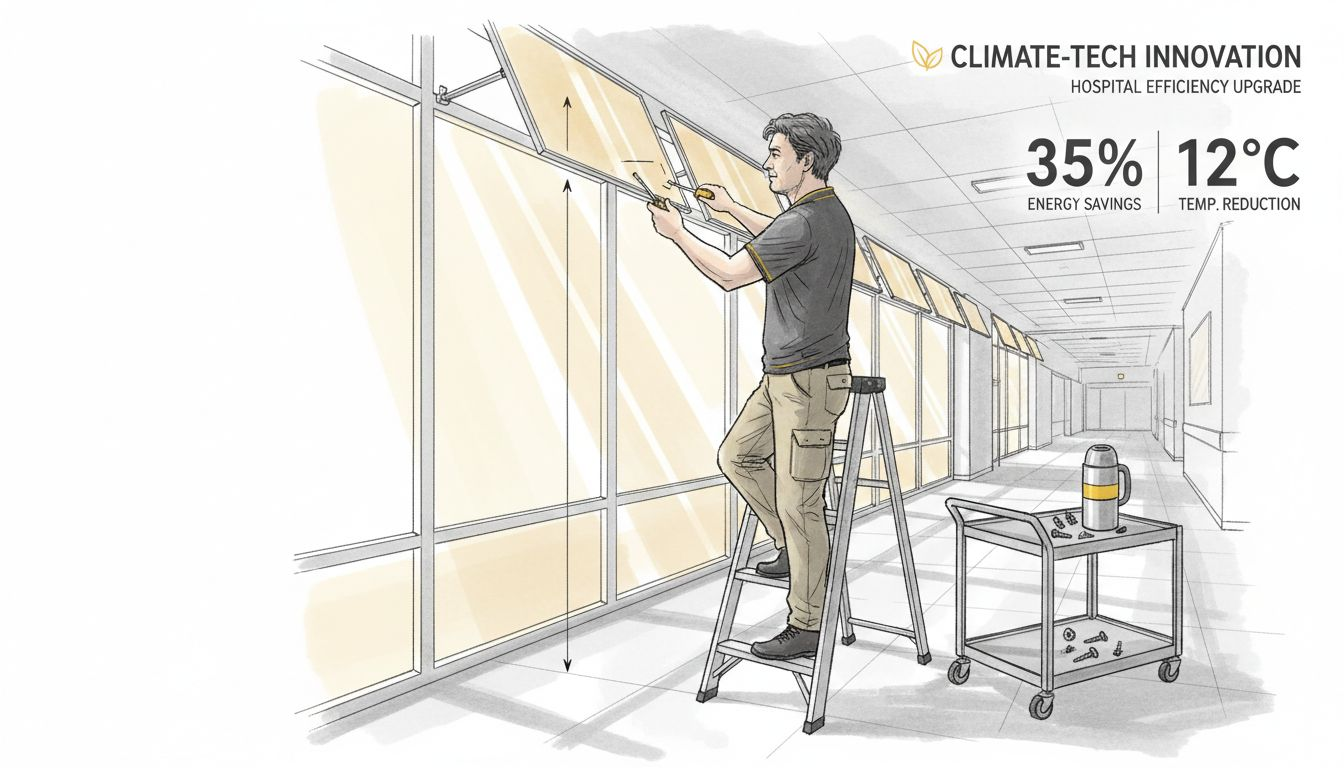
The redirection mechanism involves multiple sophisticated techniques. Prismatic surfaces with carefully calculated angles capture incoming sunlight and mathematically redirect light waves, effectively extending illumination deep into interior spaces. Some panels utilise micro-structured surfaces with specialised coatings that can reflect, diffract, and disperse light at specific angles, ensuring uniform distribution without creating harsh glare or temperature fluctuations. These intelligent surfaces act like optical networks, collecting sunlight from exterior facing sides and channelling it through intricate internal pathways designed to maximise spatial penetration.
These panels operate through three primary redirection strategies: reflection, refraction, and diffusion. Reflective strategies involve mirror-like surfaces that bounce light at predictable angles, refractive approaches bend light waves through precision-engineered transparent materials, while diffusive techniques scatter light to create soft, even illumination. Each approach addresses unique architectural challenges, allowing healthcare designers to create adaptive lighting environments that respond dynamically to changing solar conditions and specific spatial requirements.
Pro tip: When implementing reflective panel technologies, conduct thorough site-specific solar mapping to determine optimal panel orientation and ensure maximum light transmission efficiency.
Integrating Panels Into Healthcare Facilities
Healthcare facility integration of reflective panels requires a multidisciplinary approach that goes beyond simple architectural implementation. Comprehensive strategies demand coordinated planning between architects, lighting engineers, and healthcare stakeholders to ensure optimal daylight penetration and therapeutic environment design.
The integration process involves several critical considerations. Building orientation plays a pivotal role, with panel placement strategically determined by solar trajectories, building geometry, and specific clinical area requirements. Hospitals must conduct detailed computational simulations to model light distribution, ensuring panels redirect sunlight effectively without generating excessive heat or creating disruptive glare. Advanced daylight modeling techniques have become essential in validating panel integration, focusing on user-centred design and sustainable performance metrics.
Successful panel integration encompasses multiple technical and architectural dimensions. Hospitals must carefully analyse facade composition, interior spatial layouts, and patient care zone requirements. This involves assessing factors like window-to-wall ratios, surface reflectivity, panel material selection, and potential thermal performance. Collaborative design processes that incorporate input from clinicians, patients, and technical specialists ensure that reflective panel systems not only provide optimal illumination but also support healing environments and meet stringent healthcare infrastructure standards.
Pro tip: Engage a multidisciplinary design team specialising in healthcare lighting to conduct comprehensive site-specific assessments before implementing reflective panel technologies.
Health, Energy, and Sustainability Impacts
Reflective panel technologies represent a sophisticated intersection of healthcare design, energy efficiency, and environmental sustainability. Optimally positioned reflective panels demonstrate remarkable potential for transforming hospital environments by simultaneously addressing patient well-being and operational energy consumption, creating holistic solutions that extend far beyond traditional architectural approaches.
The health impacts of these systems are particularly profound. Natural daylight facilitated through advanced reflective technologies has been scientifically linked to improved patient recovery rates, enhanced staff psychological well-being, and increased circadian rhythm regulation. By carefully controlling and distributing sunlight, these panels can reduce stress levels, support healing processes, and create therapeutic environments that actively contribute to patient recovery. Detailed simulation-based analyses reveal intricate relationships between panel design, spatial layout, and overall environmental performance, demonstrating how strategic light management can simultaneously support health outcomes and energy efficiency.
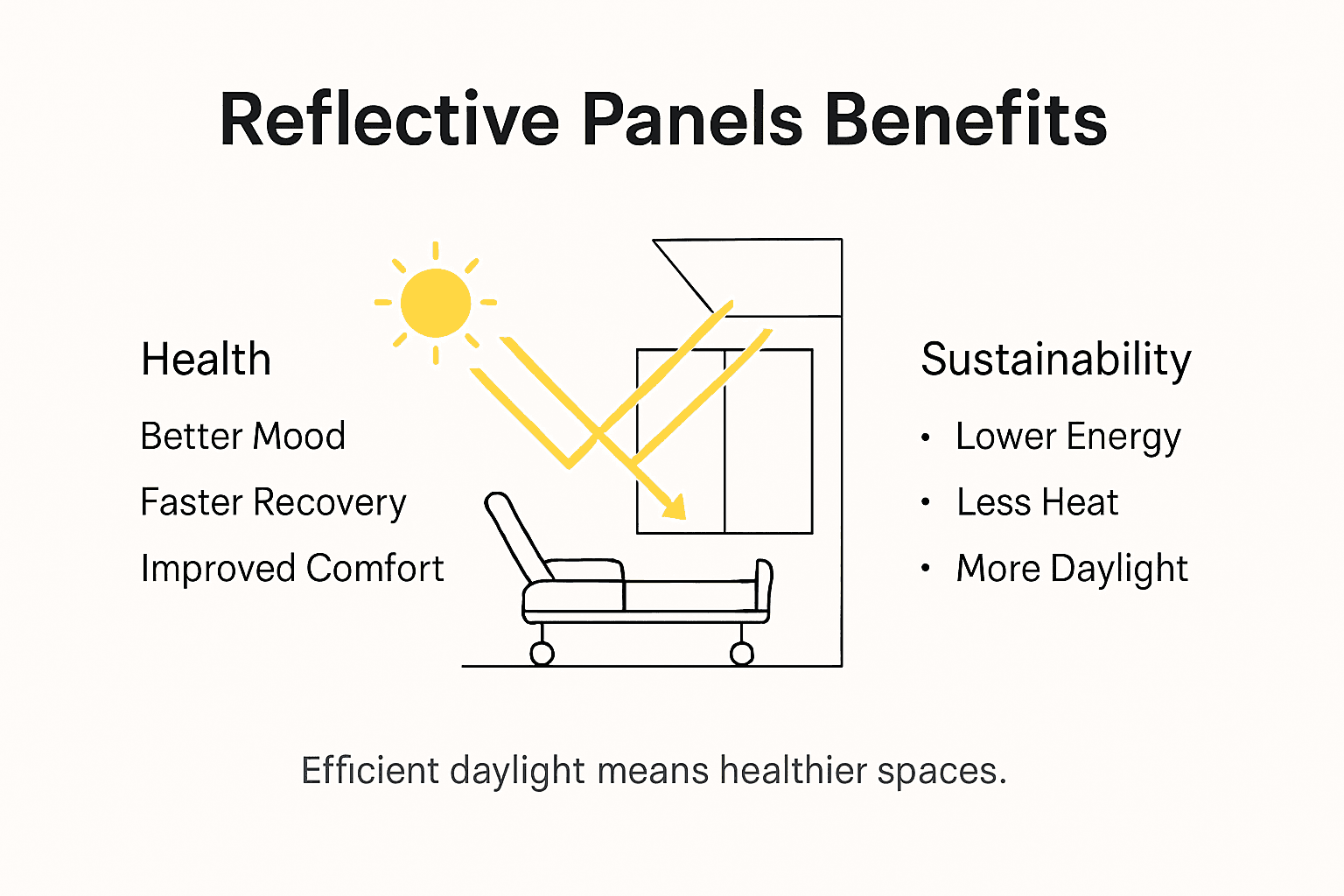
From an energy perspective, reflective panel systems offer substantial sustainability advantages. By minimising reliance on artificial lighting and reducing thermal load, these technologies can generate significant energy savings. Hospitals implementing advanced daylight systems typically observe reductions in electrical consumption ranging between 30-50%, depending on panel configuration and building characteristics. This not only translates to considerable financial savings but also represents a meaningful contribution to reducing carbon emissions and supporting broader environmental conservation objectives.
Reviewing the impacts of reflective panels in hospitals offers perspective on their benefits:
Impact Area | Reflective Panels Benefit | Example Metric |
Patient Recovery | Faster healing, stress reduction | Up to 30% shorter recovery time |
Staff Well-being | Enhanced mood, less fatigue | Improved satisfaction scores |
Energy Efficiency | Lower electricity usage | 30-50% reduction in lighting cost |
Sustainability | Reduced carbon footprint | Fewer CO2 emissions annually |
Pro tip: Conduct comprehensive energy performance simulations before panel installation to precisely quantify potential efficiency gains and optimise system design for your specific healthcare environment.
Common Pitfalls and Optimisation Strategies
Designing reflective panel systems for healthcare environments involves navigating a complex landscape of technical and architectural challenges. Hospitals frequently encounter critical pitfalls during daylight integration, including poor panel orientation, excessive glare, and inadequate light distribution, which can significantly compromise the intended therapeutic benefits.
Primary optimisation strategies centre on comprehensive computational modelling and adaptive design approaches. Parametric design techniques enable precise spatial configuration and responsive facade development, allowing architects to simulate and mitigate potential issues before physical implementation. Key considerations include detailed solar trajectory analysis, thermal performance mapping, and understanding localised climate variations. Successful implementations require nuanced strategies that balance light penetration, thermal management, and visual comfort, accounting for seasonal changes and specific hospital ward requirements.
Technical optimisation demands a multidisciplinary approach involving lighting engineers, architects, and healthcare specialists. Critical evaluation metrics should encompass multiple dimensions: daylight autonomy, glare potential, thermal load reduction, and patient comfort indices. Hospitals must develop sophisticated assessment protocols that go beyond traditional design metrics, incorporating user experience feedback, staff well-being indicators, and long-term energy performance data. This holistic approach ensures reflective panel systems deliver measurable improvements in healing environments, staff productivity, and operational sustainability.
Pro tip: Implement comprehensive pre-installation simulation models that incorporate real-world hospital usage patterns to accurately predict and mitigate potential lighting performance challenges.
Enhance Hospital Daylight with Advanced Reflective Panels
Reflective panels transform natural sunlight distribution to create healthier, more comfortable hospital environments. If your healthcare facility faces challenges like inconsistent daylight, excessive energy costs, or insufficient natural light in patient rooms and staff areas, innovative solutions are available. Our proprietary systems at LightMirror use advanced physics and AI-driven optimisation to redirect sunlight efficiently, boosting patient recovery, improving staff well-being, and significantly reducing artificial lighting and heating demands.
Explore how the Healing Hill daylight system brings adaptive, sustainable illumination to healthcare spaces where natural light is crucial. For projects requiring versatile and responsive light control, the Saaremaa lighthouse collection offers cutting-edge panel designs optimised for changing daylight conditions. Discover how strategic daylight integration can create calming, therapeutic spaces that support faster healing and energised staff.
Take the first step towards transforming your healthcare facility’s lighting environment. Visit LightMirror today to learn about our complete service offerings from feasibility studies to full panel installation. Don’t wait to unlock the energy savings and health benefits that advanced reflective panels can deliver now.
Frequently Asked Questions
What are reflective panels in healthcare?
Reflective panels are advanced architectural systems designed to capture, redirect, and amplify natural daylight, improving illumination in healthcare environments like hospitals.
How do reflective panels work to redirect sunlight?
Reflective panels use sophisticated optical principles, employing geometric designs to capture and redirect sunlight deep into interior spaces, utilising strategies like reflection, refraction, and diffusion.
What benefits do reflective panels provide in hospital settings?
Reflective panels contribute to improved patient recovery, enhance staff well-being by providing natural light, reduce energy consumption, and create therapeutic environments promoting healing.
What are the different types of reflective panels available?
The main types of reflective panels include static prismatic panels, dynamic tracking panels, and hybrid redirection systems, each offering unique advantages tailored to specific lighting needs in healthcare facilities.
Recommended
Comments