


Sustainable Lighting Implementation Guide for Healthcare
- Dimitri

- Jan 8
- 7 min read
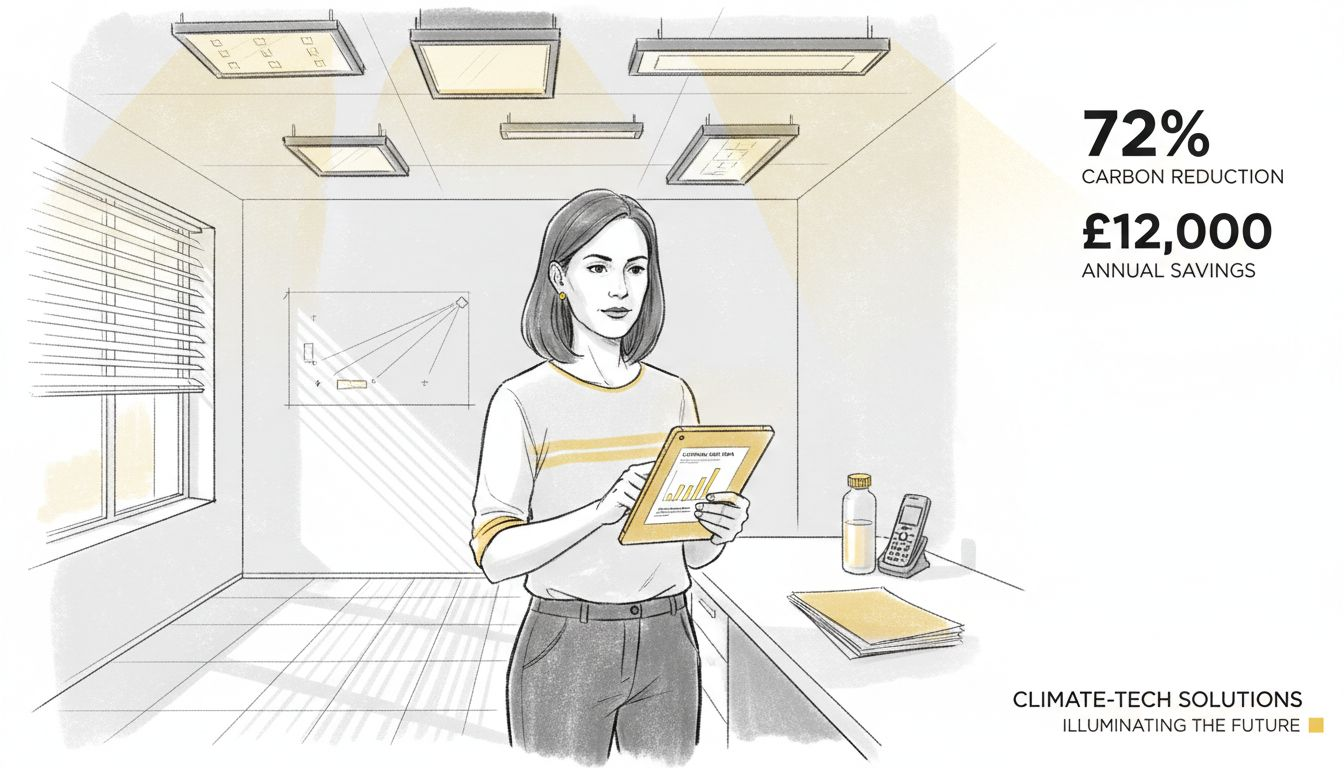
More than half of British healthcare facilities report rising energy costs impacting operational budgets. Meeting strict European green building standards while enhancing patient recovery presents a daily challenge. Thoughtful lighting upgrades not only improve comfort but also support clinical goals and cut long term expenses. This guide delivers practical steps for managing lighting changes that benefit both patients and budgets.
Table of Contents
Quick Summary
Key Point | Explanation |
1. Conduct a comprehensive lighting audit | Assess current energy usage and lighting quality to identify areas for improvement and align with sustainability goals. |
2. Choose energy-efficient lighting technologies | Opt for solutions like LED systems that reduce energy consumption and improve patient comfort while integrating with existing systems. |
3. Design optimal daylight redirection systems | Create effective natural light strategies to enhance patient healing and staff well-being, considering building design and environmental factors. |
4. Follow proper installation protocols | Ensure compliance with safety standards and undertake rigorous testing to validate functionality and performance of new systems. |
5. Implement a systematic performance verification process | Regularly monitor and evaluate energy use and lighting quality to optimise system performance over time and gather feedback from users. |
Step 1: Assess facility lighting needs and sustainability goals
Assessing your healthcare facility’s lighting requirements forms the critical foundation for implementing sustainable lighting solutions. This comprehensive evaluation will help you understand your current infrastructure, identify improvement opportunities, and align your lighting strategy with broader environmental and patient care objectives.
Begin by conducting a meticulous audit of your existing lighting systems. Comprehensive lighting requirements demand a systematic approach that examines multiple dimensions beyond simple illumination. Focus on key evaluation parameters including current energy consumption, lighting quality, patient comfort zones, staff work environments, and potential circadian rhythm impacts. Measure existing light levels across different hospital areas such as patient rooms, corridors, surgical spaces, and administrative sections. Document wattage, fixture types, replacement frequencies, and energy consumption patterns for each zone.
Next, develop a nuanced sustainability framework that translates your initial assessment into actionable goals. This involves setting precise targets for energy reduction, carbon footprint minimisation, and improved lighting performance. Consider metrics like kilowatt-hour reduction percentages, potential renewable energy integration, and alignment with green building standards. Engage stakeholders from facilities management, clinical leadership, and sustainability teams to ensure a holistic perspective that balances technical requirements with patient care objectives.
Expert Recommendation: Invest in a professional lighting assessment tool that provides granular data on energy consumption and recommends targeted sustainability interventions.
Step 2: Select suitable sustainable lighting solutions
Choosing appropriate sustainable lighting solutions represents a pivotal moment in transforming your healthcare facility’s environmental performance. Your selection will directly impact energy efficiency, patient experience, and operational costs for years to come.
Focus on technologies that deliver multiple benefits simultaneously. Sustainable healthcare commitments emphasise innovative energy efficient solutions like LED lighting systems that dramatically reduce power consumption. Evaluate potential lighting solutions across several critical dimensions: energy efficiency ratings, colour rendering index, light quality, compatibility with circadian rhythm requirements, and long term maintenance costs. Prioritise solutions that offer seamless integration with existing infrastructure while providing superior illumination for medical environments.
When comparing potential lighting technologies, conduct comprehensive performance assessments that go beyond initial purchase price. Consider factors such as total lifecycle costs, energy consumption patterns, replacement frequencies, and potential contributions to your facility’s overall sustainability goals. Engage multidisciplinary teams including facilities managers, clinical staff, and sustainability experts to ensure a holistic selection process that balances technical specifications with patient care requirements.
Expert Recommendation: Request detailed performance demonstrations and pilot testing of sustainable lighting solutions before full implementation to validate real world effectiveness and compatibility.
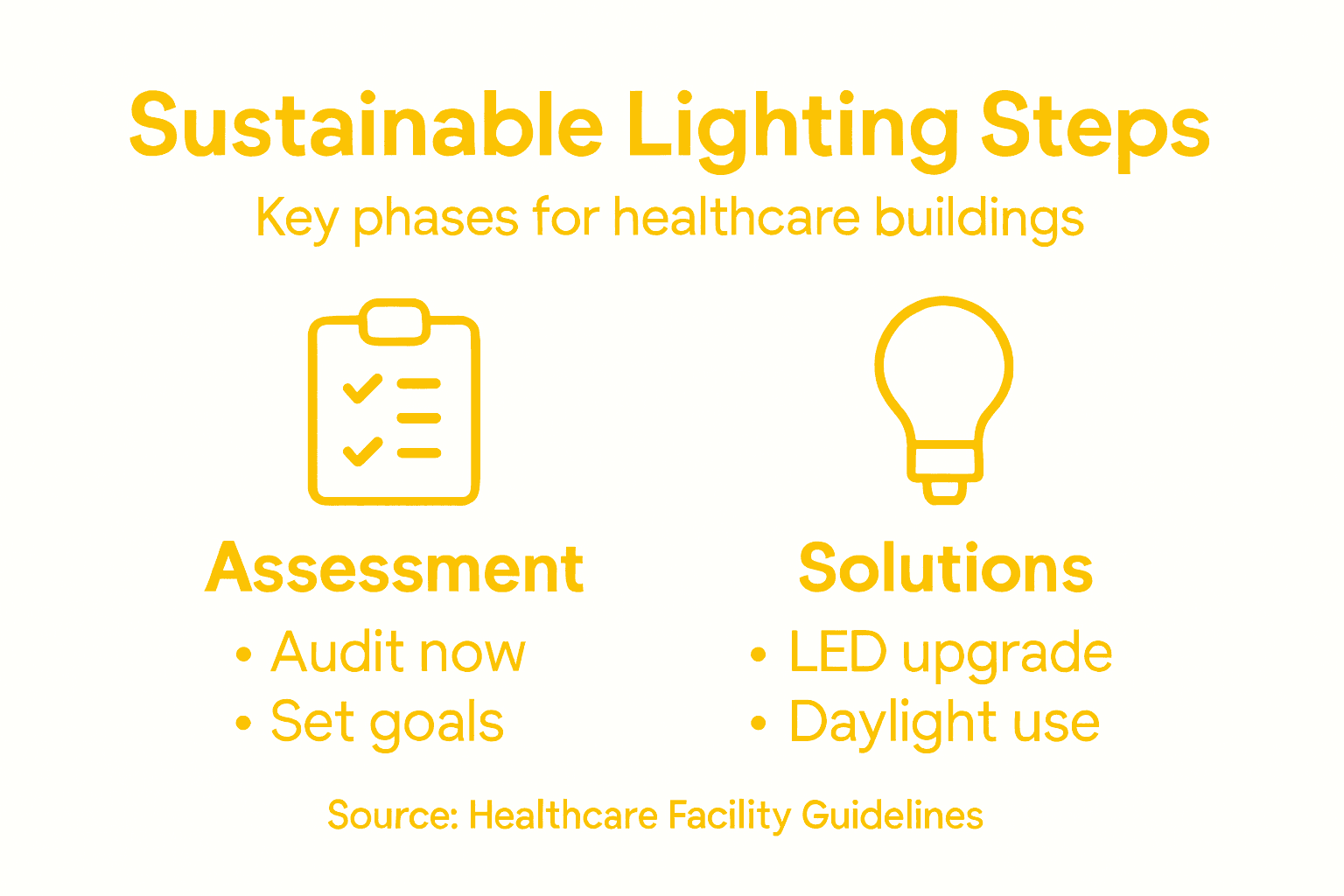
Here is a summary of common sustainable lighting technologies and their advantages in healthcare settings:
Lighting Technology | Key Advantages | Typical Application |
LED Systems | High energy efficiency, long life | Patient rooms, corridors |
Prismatic Panels | Optimised natural light, low glare | Daylit areas, waiting zones |
Intelligent Controls | Automatic light adjustment | Offices, staff workspaces |
Reflective Surfaces | Enhanced light distribution | Surgical suites, reception |
Step 3: Design adaptive daylight redirection systems
Designing an effective daylight redirection system requires a sophisticated approach that transforms how natural light interacts with your healthcare facility’s interior spaces. This critical step will help you create a lighting environment that supports patient healing and staff well-being.
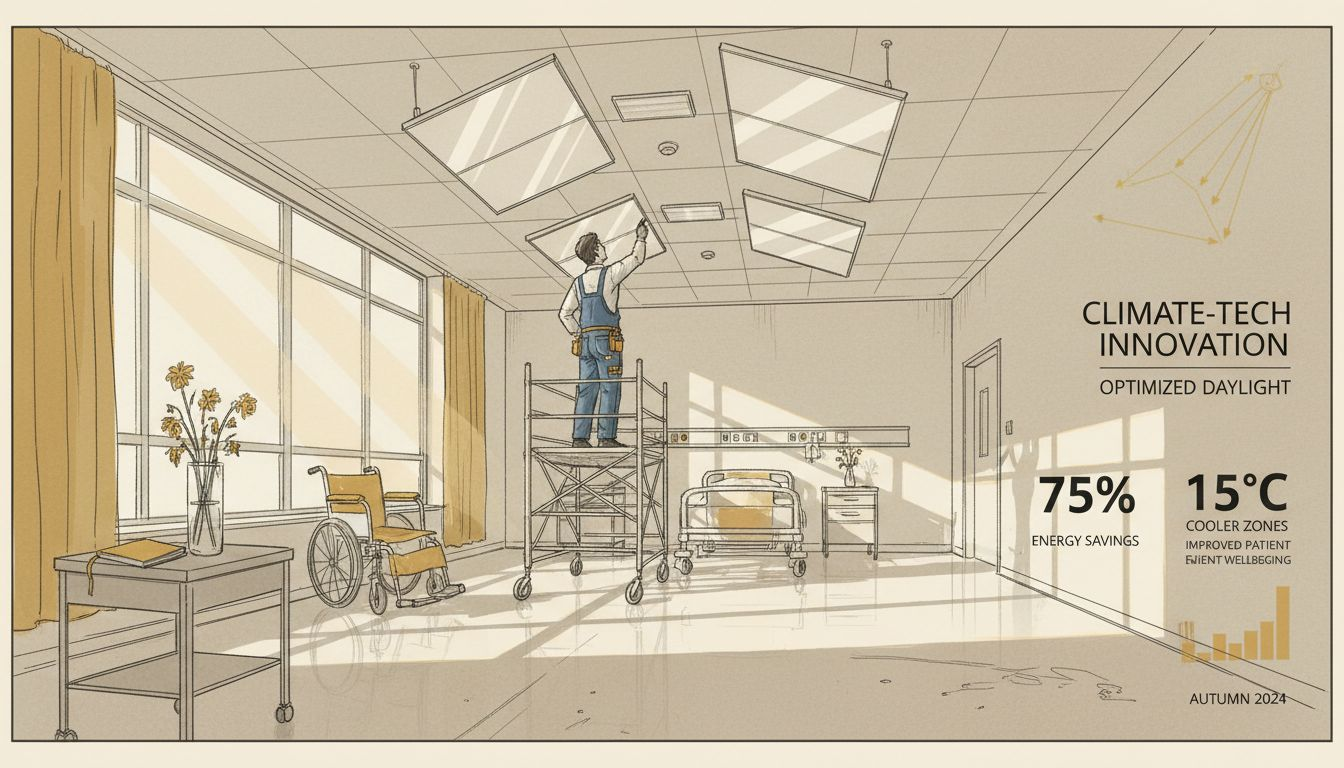
Computational daylight models demonstrate the potential for advanced prismatic panel technologies that optimise natural light distribution while minimising solar heat gain. Develop a comprehensive design strategy that considers multiple factors including building orientation, window placement, reflective surface angles, and seasonal light variations. Focus on creating uniform light distribution that eliminates harsh shadows and glare while maximising the biological benefits of natural light in healthcare environments. Integrate advanced sensors and adaptive mechanisms that can dynamically adjust light redirection based on time of day, weather conditions, and specific spatial requirements.
Ensure your design incorporates precise computational simulations that model light penetration, thermal performance, and visual comfort. Collaborate with lighting engineers, architects, and healthcare design specialists to create a holistic system that balances technical performance with patient and staff physiological needs. Consider implementing layered light redirection strategies that combine prismatic panels, reflective surfaces, and intelligent control systems to achieve optimal natural illumination throughout different areas of your healthcare facility.
Expert Recommendation: Conduct comprehensive mock-up testing in representative spaces to validate the performance of your daylight redirection design before full implementation.
Step 4: Install and commission lighting technologies
Successfully installing sustainable lighting technologies represents a critical phase in transforming your healthcare facility’s lighting infrastructure. This step requires meticulous planning, technical expertise, and adherence to stringent healthcare facility standards.
Healthcare installation requirements mandate strict compliance with safety and regulatory protocols. Begin by developing a comprehensive installation plan that addresses electrical systems, mounting configurations, and integration with existing infrastructure. Coordinate closely with certified electrical engineers and healthcare facility managers to ensure precise implementation. Pay special attention to critical considerations such as electrical load management, emergency power compatibility, and infection control protocols.
Follow systematic commissioning procedures that involve rigorous testing and validation of each lighting component. Conduct comprehensive performance assessments that verify energy efficiency, light quality, sensor responsiveness, and system interoperability. Create detailed documentation tracking installation parameters, system configurations, and performance benchmarks. Implement staged testing protocols that validate functionality across different facility zones including patient rooms, corridors, surgical spaces, and administrative areas.
Expert Recommendation: Develop a structured post installation monitoring protocol to track system performance and quickly address any operational inconsistencies.
Step 5: Verify system performance and energy savings
Verifying your new lighting system’s performance represents the final critical stage in ensuring your healthcare facility achieves its sustainability and operational efficiency objectives. This comprehensive evaluation will validate your investment and provide actionable insights into system functionality.
Comprehensive commissioning guidelines emphasise the importance of systematic performance verification. Implement a multi staged assessment approach that includes quantitative energy consumption measurements, qualitative performance evaluations, and comparative analyses against initial design specifications. Utilise calibrated energy monitoring equipment to track real time power consumption, comparing actual performance against projected energy savings. Analyse lighting quality metrics such as luminance uniformity, colour rendering, and adaptive response capabilities across different facility zones.
Based on healthcare facility commissioning protocols, develop a rigorous verification process that extends beyond technical measurements. Gather feedback from healthcare staff and patients regarding lighting comfort, visual clarity, and perceived environmental impact. Create detailed performance reports documenting energy savings, operational efficiency improvements, and potential areas for future optimisation. Integrate continuous monitoring mechanisms that allow for ongoing system performance tracking and proactive maintenance.
Expert Recommendation: Schedule quarterly performance reviews to maintain optimal lighting system efficiency and quickly identify potential improvement opportunities.
The following table compares key post-installation evaluation metrics for healthcare facility lighting systems:
Metric | Purpose | Frequency |
Energy Consumption | Quantify actual energy savings | Continuous monitoring |
Lighting Quality | Assess comfort and visual clarity | Quarterly reviews |
System Responsiveness | Check sensor and control performance | At commissioning, then as required |
User Feedback | Collect staff and patient perceptions | Biannual surveys |
Elevate Healthcare Lighting with Advanced Sustainable Solutions
The journey outlined in the Sustainable Lighting Implementation Guide for Healthcare reveals common challenges in balancing energy efficiency, patient comfort, and staff well-being. Key obstacles include integrating adaptive daylight redirection systems and ensuring measurable energy savings while enhancing natural light exposure throughout healthcare spaces. If you are aiming to reduce operational costs and support healing environments with innovative, environmentally conscious lighting, solutions that harness natural daylight offer transformative benefits.
Explore how Healing Hill | LightMirror 2023 uses state-of-the-art reflective panels combined with AI algorithms to optimise sunlight entry for clinical and communal areas. This technology not only cuts energy consumption but also aligns with green building certifications such as BREEAM and LEEDS. Designed specifically for healthcare settings, the approach compliments the detailed assessment and verification stages emphasised in the guide, ensuring your sustainability goals are fully realised.
Bring your sustainable lighting vision into reality today. Visit LightMirror EU to discover proven daylight redirection systems and comprehensive support services. For an inspiring example of innovation in practice, see Saaremaa lighthouse | LightMirror 2023. Start enhancing patient recovery and staff welfare while reducing energy costs by connecting with experts ready to guide you through feasibility, installation, and beyond.
Frequently Asked Questions
What are the first steps in assessing lighting needs for my healthcare facility?
Begin by conducting a thorough audit of your current lighting systems, focusing on energy consumption, light quality, and patient comfort. Document measurements across areas like patient rooms and corridors to identify specific improvement opportunities.
How do I select sustainable lighting solutions for my healthcare facility?
Choose lighting technologies that enhance energy efficiency while meeting the specific lighting needs of medical environments. Evaluate options based on energy efficiency ratings and maintenance costs, and aim for solutions that integrate seamlessly with existing infrastructure.
What factors should I consider when designing daylight redirection systems?
Focus on building orientation, window placement, and reflective surface angles to optimise natural light distribution. Implement computational models to ensure uniform light throughout the facility, minimising glare and shadows for better visual comfort.
What steps are involved in the installation of sustainable lighting technologies?
Develop a detailed installation plan that adheres to safety and regulatory protocols, ensuring precise integration with existing systems. Engage certified electrical professionals to manage the installation, paying careful attention to infection control and electrical load management.
How can I verify the performance and energy savings of my new lighting system?
Implement a systematic performance verification process that includes measuring energy consumption and gathering qualitative feedback from users. Monitor the system continuously, and conduct formal reviews every quarter to ensure optimal efficiency and identify areas for improvement.
Recommended
Comments