


Solar-Responsive Lighting: Transforming Healthcare Spaces
- Dimitri

- Jan 9
- 7 min read
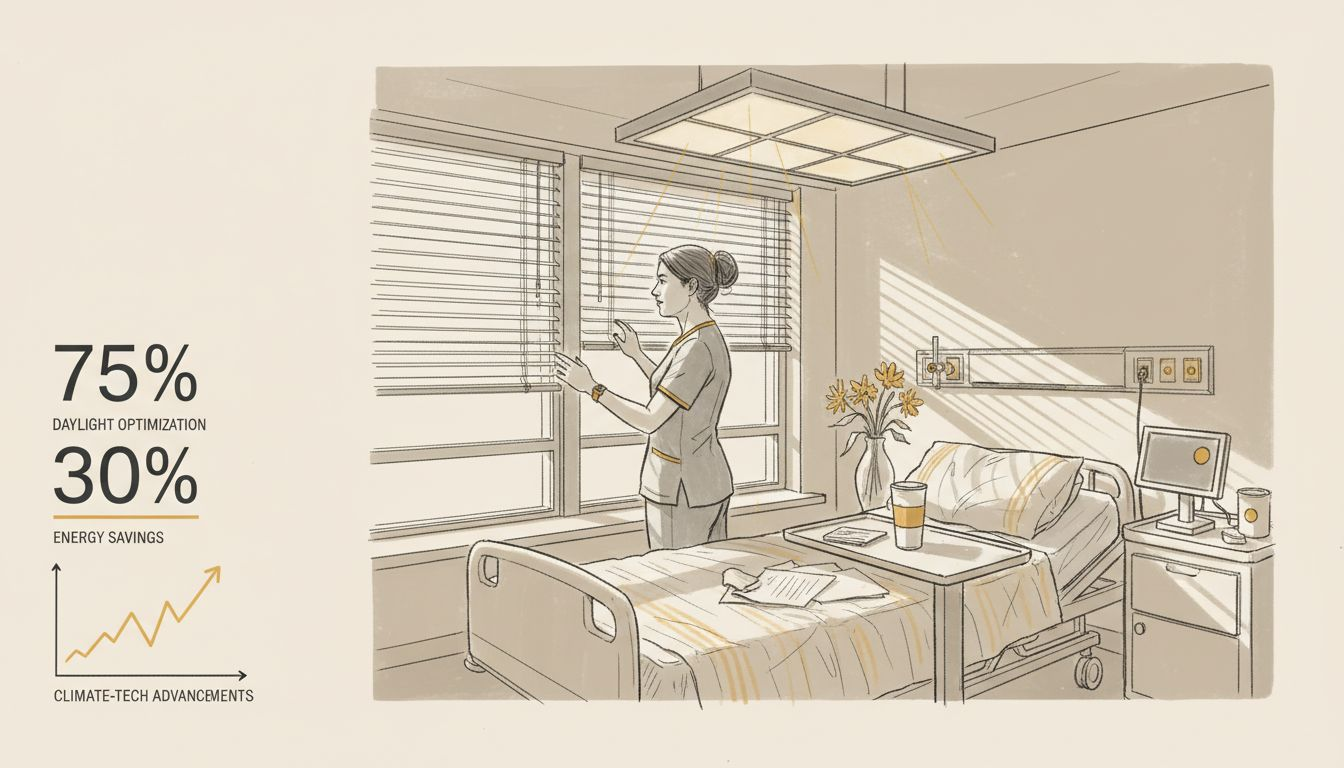
Over 60 percent of energy costs in European hospitals come from lighting and climate control. For british facility managers, balancing budgets while supporting better patient recovery feels like a constant struggle. Solar-responsive lighting delivers a new way forward by combining solar energy capture with intelligent, adaptive controls. This technology creates brighter, more comfortable healing spaces and helps hospitals cut expenses, offering measurable value for those invested in sustainability and patient outcomes.
Table of Contents
Key Takeaways
Point | Details |
Innovative Energy Utilisation | Solar-responsive lighting harnesses solar energy to dynamically adjust to changing daylight conditions, optimising energy consumption in healthcare settings. |
Enhanced Patient Well-being | These systems improve patient experiences by mimicking natural light patterns, supporting circadian rhythms and promoting recovery. |
Operational Cost Reduction | Healthcare facilities can achieve significant long-term savings through reduced energy expenditures and improved sustainability practices. |
Integration Challenges | Upfront costs and reliance on variable climate conditions can hinder implementation; careful planning and phased approaches are recommended. |
Solar-responsive lighting: Definition and fundamentals
Solar-responsive lighting represents an innovative approach to illumination that actively harnesses and manipulates natural solar energy for intelligent, adaptive lighting solutions. At its core, this technology integrates photovoltaic principles with advanced sensor systems to create dynamic lighting environments that respond automatically to changing daylight conditions. Solar energy capture techniques enable these systems to transform how healthcare spaces manage illumination.
The fundamental mechanism involves sophisticated solar reflective panels and photosensitive components that capture, store, and redistribute sunlight with exceptional precision. These systems typically comprise several critical elements: photovoltaic modules for energy conversion, intelligent controllers that analyse environmental light levels, battery storage units, and adaptive LED or natural light redirection mechanisms. By continuously monitoring ambient light intensity, these systems can automatically adjust artificial lighting, ensuring optimal brightness while minimising energy consumption.
Unlike traditional lighting solutions, solar-responsive technologies offer healthcare facilities unprecedented flexibility. They can seamlessly transition between natural and artificial light sources, maintaining consistent illumination levels throughout different times of day. Interdisciplinary solar technology research demonstrates that these systems not only reduce energy costs but also contribute to patient well-being by mimicking natural circadian rhythms and providing more comfortable, intuitive lighting environments.
The table below compares solar-responsive lighting with traditional lighting in healthcare environments:
Criteria | Solar-responsive Lighting | Traditional Lighting |
Energy Source | Solar and grid hybrid | Grid electricity only |
Adaptability | Automatically adjusts to daylight | Fixed output, manual control |
Patient Experience | Mimics natural circadian rhythm | Uniform, artificial lighting |
Operational Costs | Lower long-term costs | Higher energy expenditure |
Environmental Impact | Reduces carbon footprint | Higher emissions |

Pro tip: When implementing solar-responsive lighting in healthcare settings, conduct comprehensive site assessments to determine optimal panel placement and potential light reflection angles.
Technologies driving solar-responsive systems
Solar-responsive systems are powered by a sophisticated array of technological innovations that transform how healthcare facilities manage lighting and energy consumption. Photovoltaic module technologies form the foundational element, enabling direct conversion of solar energy into electrical power through advanced semiconductor materials. These modules incorporate multi-junction solar cells and high-efficiency photovoltaic panels specifically designed to maximise energy capture across varying environmental conditions.
Intelligent sensor networks represent another critical technological driver in solar-responsive systems. Advanced light-dependent resistors, motion sensors, and environmental monitoring components work synchronously to create adaptive lighting environments. IoT-enabled control systems enable real-time data processing, allowing instantaneous adjustments to lighting intensity, colour temperature, and distribution based on occupancy, time of day, and specific healthcare space requirements.
The integration of energy storage technologies completes the solar-responsive ecosystem. Sophisticated lithium-ion battery systems with intelligent battery management provide stable power storage, ensuring consistent illumination during periods of low solar radiation. These battery systems incorporate advanced thermal management, deep-cycle capabilities, and rapid charging technologies that maintain optimal performance in demanding healthcare environments.
Below is a summary of the main technological components of solar-responsive lighting systems:
Component | Main Function | Relevance in Healthcare |
Photovoltaic Modules | Convert sunlight into electricity | Enables sustainable power source |
Intelligent Sensors | Monitor light and occupancy | Optimises light for each space |
Battery Storage | Stores energy for later use | Ensures consistent illumination |
IoT Controllers | Real-time system adjustments | Facilitates adaptive environments |
Pro tip: Conduct comprehensive energy audits and technology compatibility assessments before implementing solar-responsive lighting to ensure seamless integration with existing healthcare infrastructure.
Benefits for patients and healthcare facilities
Solar-responsive lighting systems offer transformative advantages for both patients and healthcare institutions, creating environments that simultaneously support healing and operational efficiency. Solar energy systems in healthcare deliver remarkable benefits by reducing operational costs while enhancing patient care environments through intelligent, sustainable illumination strategies.

For patients, these advanced lighting systems provide critical physiological and psychological advantages. Natural light exposure regulated through solar-responsive technologies can significantly improve circadian rhythms, potentially accelerating recovery times and reducing stress levels. Patients experience more consistent, comfortable lighting that mimics natural daylight patterns, which has been scientifically linked to improved mood, better sleep quality, and enhanced overall well-being during medical treatments.
Healthcare facilities gain substantial operational advantages through these innovative lighting solutions. Sustainable lighting technologies enable significant energy cost reductions, with some installations demonstrating up to 60% lower electricity consumption compared to traditional lighting systems. Beyond financial savings, these technologies support environmental sustainability goals, reduce carbon footprints, and demonstrate institutional commitment to progressive, patient-centred healthcare infrastructure.
Pro tip: Engage multidisciplinary teams including clinicians, lighting designers, and energy specialists when implementing solar-responsive lighting to ensure comprehensive performance and patient benefit optimisation.
Integration with building sustainability standards
Solar-responsive lighting systems represent a critical pathway for healthcare facilities to achieve comprehensive building sustainability certifications. Daylighting strategies in sustainable design provide sophisticated approaches to optimising natural light utilisation, energy management, and occupant comfort while meeting rigorous environmental performance standards such as BREEAM, LEED, and Green Star.
The technical integration involves multiple sophisticated considerations. Building-Integrated Photovoltaic (BIPV) technologies enable seamless incorporation of solar energy generation directly into architectural elements, simultaneously addressing energy production and sustainability certification requirements. These advanced systems go beyond traditional solar panel installations by functioning as integral building components that generate electricity, provide solar shading, and reduce overall cooling loads while contributing to a building’s environmental performance metrics.
Renewable energy building design demands holistic approaches that balance technical performance, economic viability, and regulatory compliance. Healthcare facilities must navigate complex certification pathways, considering factors such as energy efficiency ratings, carbon emissions reduction, material sustainability, and innovative technological implementations. Successful integration requires collaborative engagement between architects, engineers, sustainability consultants, and healthcare administrators to develop comprehensive solutions that meet stringent international sustainability standards.
Pro tip: Conduct a comprehensive sustainability audit early in the design process to identify optimal solar-responsive lighting integration strategies that align with specific building certification requirements.
Costs, challenges, and alternative solutions
Solar-responsive lighting systems for healthcare facilities present a nuanced landscape of financial considerations and technological challenges. Solar-powered lighting system challenges demonstrate significant upfront investment requirements, with initial capital costs representing the most substantial barrier to widespread implementation. Typical expenses include advanced photovoltaic modules, intelligent sensor networks, energy storage systems, and specialised installation infrastructure, which can initially seem prohibitively expensive for many healthcare organisations.
The operational challenges extend beyond mere financial considerations. Weather dependency, maintenance complexity, and technological reliability emerge as critical factors healthcare administrators must carefully evaluate. Intermittent solar radiation, particularly in regions with variable climate conditions, necessitates robust hybrid energy solutions that can seamlessly transition between solar and traditional power sources. Advanced energy storage technologies and smart grid integration offer promising strategies to mitigate these inherent system limitations.
Healthcare solar energy project strategies reveal multiple alternative solutions for organisations seeking sustainable lighting approaches. Hybrid renewable systems combining solar technologies with wind or geothermal energy provide enhanced reliability and performance. Innovative financing models, including energy performance contracts and green infrastructure funding, can significantly reduce initial investment barriers. Healthcare facilities can also explore phased implementation strategies, gradually integrating solar-responsive technologies across different departments or building sections to manage financial and operational risks.
Pro tip: Develop a comprehensive five-year total cost of ownership model that includes initial investment, projected energy savings, maintenance expenses, and potential government incentives before committing to solar-responsive lighting systems.
Embrace Solar-Responsive Lighting to Transform Healthcare Environments
Many healthcare facilities face the challenge of balancing energy efficiency with patient well-being while managing complex lighting needs. Solar-responsive lighting offers a way to mimic natural circadian rhythms, reduce operational costs, and lower carbon footprints. However, implementing this innovative technology requires precise control of sunlight, adaptive systems, and seamless integration with existing infrastructure. This is where Saaremaa lighthouse | LightMirror 2023 stands out by utilising advanced reflective panels and AI algorithms to direct natural light deep into healthcare interiors.
Discover how our solutions at LightMirror can optimise natural daylight exposure, reduce artificial lighting demands, and promote healthier healing spaces. By leveraging intelligent environmental monitoring and sustainable design principles aligned with standards like BREEAM and LEED, you gain an energy-efficient system tailored specifically for hospitals and care homes. Interested in creating adaptive, health-promoting environments with proven energy savings? Explore our innovation showcased in the Night sky | LightMirror 2023 collection, then take the next step to enhance your healthcare facility’s lighting strategy today.
Frequently Asked Questions
What is solar-responsive lighting?
Solar-responsive lighting is an innovative technology that harnesses solar energy to create adaptive lighting solutions, automatically adjusting to changing daylight conditions to enhance illumination in spaces like healthcare facilities.
How does solar-responsive lighting benefit healthcare environments?
It mimics natural circadian rhythms, providing consistent and comfortable lighting that can improve patient well-being, enhance recovery times, and reduce energy costs for healthcare facilities.
What technologies are used in solar-responsive lighting systems?
These systems incorporate photovoltaic modules for solar energy conversion, intelligent sensor networks for monitoring light levels, battery storage for energy management, and IoT-enabled controllers for real-time adjustments.
What are the challenges of implementing solar-responsive lighting in healthcare?
Key challenges include high initial capital costs, weather dependency for solar energy capture, and the complexity of maintenance and system reliability, necessitating thoughtful planning and potential hybrid energy solutions.
Recommended
Comments