


Reflective Panel Technology: Improving Hospital Lighting
- Dimitri

- Jan 7
- 7 min read

A growing number of British hospitals are turning to innovative lighting solutions that reshape patient outcomes and energy budgets. When natural daylight is harnessed effectively, recovery rates improve and operational costs drop. With advanced reflective panel technology now boosting indoor light levels by up to 30 percent, European facility managers have fresh opportunities to create sustainable healthcare environments that support well-being and savings.
Table of Contents
Key Takeaways
Point | Details |
Innovative Technology | Reflective panel technology enhances natural lighting in healthcare, significantly impacting patient recovery and staff well-being. |
Panel Variations | Various reflective panel types, including static and dynamic systems, cater to different architectural needs and light management strategies. |
Daylight Optimisation Benefits | Effective daylight optimisation can reduce energy costs by up to 30%, contributing to sustainability while improving interior environments. |
Integration Challenges | Successful deployment requires careful planning and organisation-wide collaboration to address architectural, institutional, and technical hurdles. |
Defining Reflective Panel Technology
Reflective panel technology represents an innovative approach to transforming interior lighting environments by strategically capturing and redirecting natural sunlight. These sophisticated systems utilise advanced optical engineering to maximise daylight penetration, particularly in healthcare settings where lighting quality significantly impacts patient recovery and staff well-being.
At its core, the technology involves specialised panels installed on hospital roofs and facades designed to capture and redirect sunlight indoors. Unlike traditional lighting solutions, these panels are not passive architectural elements but active systems incorporating sophisticated hardware and proprietary software for precise light modelling.
The key components of reflective panel technology include:
Precision-engineered optical surfaces
Advanced angle-tracking mechanisms
Environmental sensors for real-time light optimization
Software algorithms that calculate ideal light redirection
These systems work by detecting and tracking sunlight throughout the day, automatically adjusting panel angles to ensure maximum natural light transmission into interior spaces. The result is a dynamic lighting solution that reduces artificial lighting requirements and creates more natural, healing environments within healthcare facilities.
Pro tip: When evaluating reflective panel systems, prioritise technologies with adaptive tracking capabilities and comprehensive environmental monitoring features to ensure optimal performance.
Types of Reflective Panels and Variations
Reflective panel technology encompasses several distinct variations, each designed to address specific architectural and environmental challenges in healthcare lighting design. These sophisticated systems range from static geometric panels to advanced dynamic tracking solutions that provide nuanced approaches to natural light management.
Traditional static reflective panels represent the foundational design, featuring fixed geometric configurations that redirect sunlight through predetermined angles. These panels are typically constructed from high-precision optical materials like polished aluminium, glass, or specialised polymer composites. In contrast, advanced hospital lighting panels incorporate more complex mechanisms that enable real-time light adaptation and optimization.
The primary categories of reflective panels include:
Static Reflective Panels
Fixed geometric configurations
Ideal for consistent, predictable light redirection
Lower implementation complexity
Dynamic Tracking Panels
Automated sun-tracking capabilities
Real-time light optimization
Sophisticated sensor and software integration
Hybrid Reflective Systems
Combination of static and dynamic panel technologies
Flexible light management strategies
Enhanced energy efficiency
Each panel type offers unique advantages, with selection depending on specific hospital architectural constraints, geographical location, and desired lighting outcomes. The technological sophistication ranges from simple passive reflective surfaces to intelligent systems capable of intricate light modulation and environmental responsiveness.
Here is a comparison of reflective panel types and their best-use scenarios:
Panel Type | Best Application | Complexity Level | Adaptability |
Static Reflective | Consistent, simple spaces | Low | Minimal adjustment |
Dynamic Tracking | Environments with variable sunlight | High | Real-time optimisation |
Hybrid Systems | Multi-functional or retrofitted sites | Moderate | Flexible response |
Pro tip: When selecting reflective panel variations, consider your specific architectural environment and prioritise systems offering the most adaptable light management capabilities.
How Reflective Panels Optimise Daylight
Daylight optimisation represents a sophisticated process of strategically capturing, redirecting, and enhancing natural light within hospital environments. Modern reflective panel technologies have transformed traditional approaches to interior illumination, creating intelligent systems that dynamically interact with sunlight to maximise its therapeutic and energy-efficient potential.
The core mechanism of daylight optimisation involves advanced sunlight path modelling that precisely calculates and redirects solar radiation. These sophisticated systems utilise proprietary software algorithms and precision-engineered hardware to analyse solar angles, building orientation, and environmental conditions, ensuring optimal light distribution throughout hospital interiors.
Key strategies for daylight optimisation include:
Solar Angle Tracking
Real-time monitoring of sun’s position
Dynamic panel repositioning
Maximised light capture during optimal hours
Spectral Light Filtering
Selective wavelength transmission
Reduced glare and heat absorption
Enhanced visual comfort
Thermal Management
Heat reflection and absorption control
Energy efficiency improvements
Consistent interior temperature maintenance
The technological sophistication of these systems enables significant performance improvements, typically increasing indoor light levels by 10-30% during darker months while simultaneously reducing electrical lighting requirements. By transforming natural sunlight into a controllable, precision-engineered resource, reflective panels represent a revolutionary approach to healthcare environmental design.
Pro tip: Conduct comprehensive site assessments to understand your specific architectural constraints and sunlight patterns before implementing reflective panel technologies.
Integrating Panels into Healthcare Infrastructure
Healthcare infrastructure integration represents a nuanced process of harmonising advanced lighting technologies with complex medical environments. Reflective panel systems demand meticulous planning and strategic implementation to ensure seamless architectural compatibility and operational efficiency across diverse healthcare settings.

Successful integration requires comprehensive architectural compatibility assessments that analyse building orientation, structural constraints, and existing lighting infrastructure. These assessments involve sophisticated software modelling that predicts light distribution, thermal impacts, and potential energy savings before physical installation begins.
Key integration considerations include:
Structural Assessment
Roof and facade load-bearing capacity
Existing building geometry
Potential retrofitting requirements
Operational Workflow
Minimising disruption during installation
Maintaining medical space functionality
Ensuring patient and staff comfort
Technical Compatibility
Alignment with building management systems
Electrical and control system integration
Compliance with healthcare facility regulations
The implementation process typically involves multidisciplinary collaboration between architects, healthcare administrators, lighting engineers, and medical staff to ensure that reflective panel technologies meet both technical specifications and human-centric design principles. This holistic approach guarantees that lighting solutions enhance healing environments while maintaining operational efficiency.
Below is a summary of key integration considerations for reflective panel systems in healthcare:
Consideration | Importance for Hospitals | Example Issues |
Structural Suitability | Prevents damage and failures | Roof load limits |
Workflow Disruption | Maintains clinical operations | Noise during retrofit |
Systems Compatibility | Ensures smooth technology operation | Integration with BMS |
Pro tip: Engage a multidisciplinary team during initial design stages to conduct comprehensive feasibility studies and ensure smooth technological integration.
Energy Savings and Sustainability Impacts
Sustainability in healthcare lighting represents a critical intersection of environmental responsibility and technological innovation. Reflective panel technologies offer a transformative approach to reducing energy consumption while simultaneously enhancing the quality of hospital interior environments through intelligent natural light management.
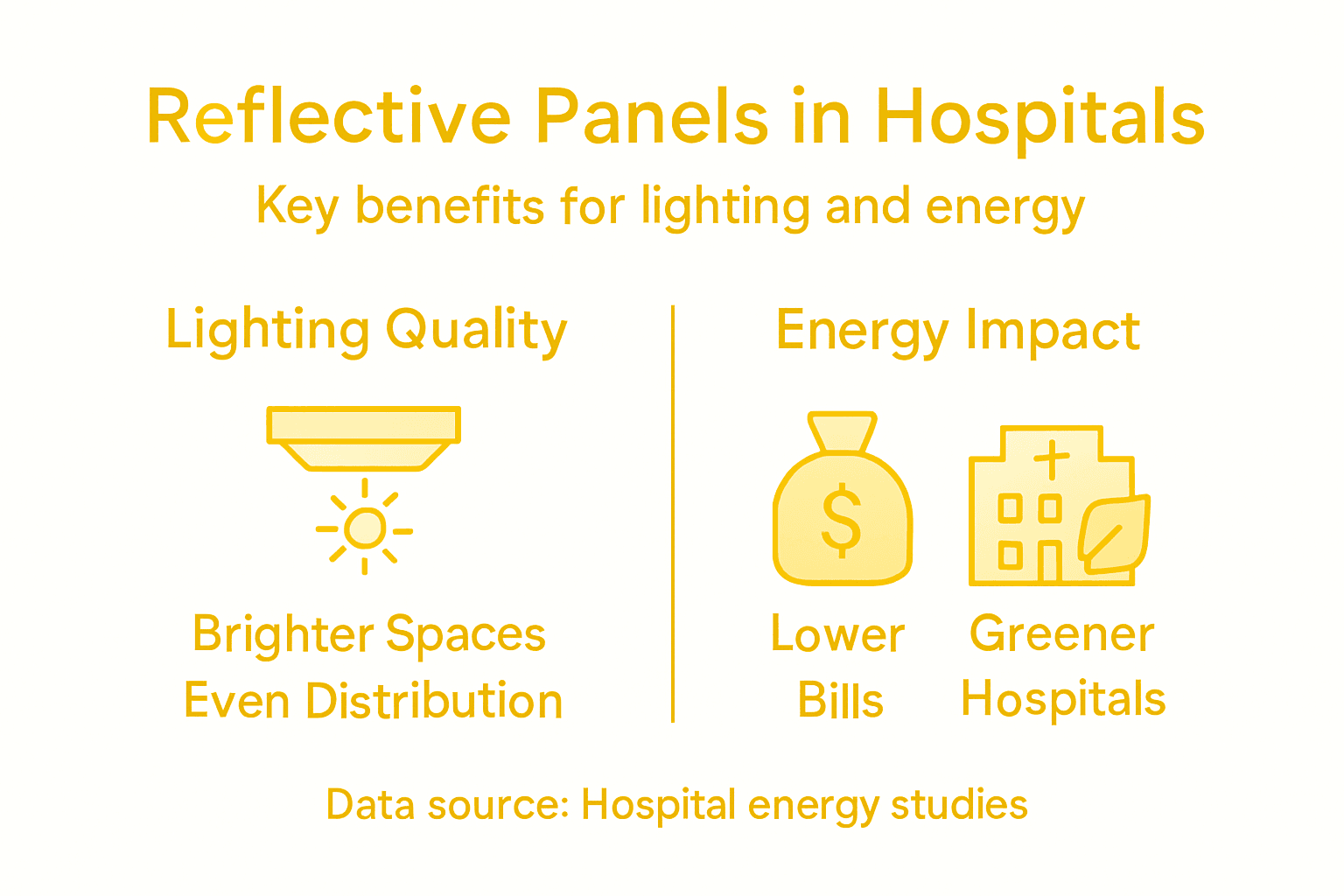
Research demonstrates that strategic daylight optimization can generate substantial energy savings, typically reducing electricity costs by up to 30% across healthcare facilities. These systems not only minimise artificial lighting requirements but also contribute significantly to reducing carbon footprints by leveraging natural solar resources more efficiently.
Key sustainability impacts include:
Energy Consumption Reduction
Decreased electrical lighting usage
Lower heating and cooling demands
Minimised carbon emissions
Resource Efficiency
Optimised natural light utilisation
Reduced reliance on grid electricity
Extended building infrastructure lifespan
Environmental Stewardship
Alignment with green building standards
Measurable greenhouse gas reductions
Promoting sustainable healthcare infrastructure
Beyond direct energy savings, reflective panel technologies support broader environmental goals by transforming hospitals into more sustainable, energy-conscious institutions. The technology represents a holistic approach to reducing environmental impact while simultaneously improving interior lighting quality and patient well-being.
Pro tip: Conduct comprehensive energy audits before and after panel installation to quantify and validate actual sustainability improvements.
Common Obstacles in Hospital Deployment
Hospital deployment challenges represent complex intersections of technological innovation, institutional inertia, and multifaceted operational requirements. Reflective panel technologies must navigate intricate organisational landscapes that demand sophisticated integration strategies beyond mere technical implementation.
The most significant barriers emerge from comprehensive stakeholder engagement processes, which require careful negotiation of diverse institutional interests and professional perspectives. Healthcare environments demand nuanced approaches that balance technological potential with existing clinical workflows, patient comfort, and staff operational preferences.
Key deployment obstacles include:
Architectural Constraints
Structural compatibility limitations
Retrofitting complexity
Building code compliance challenges
Institutional Resistance
Organisational change management
Budget approval processes
Traditional lighting system inertia
Technical Integration
Compatibility with existing systems
Maintenance and training requirements
Performance verification protocols
Successful implementation demands collaborative strategies that transcend traditional technological deployment models. Healthcare facilities require comprehensive change management approaches that address not just technical specifications, but also organisational culture, staff training, and long-term sustainability objectives.
Pro tip: Develop a phased implementation strategy that includes pilot programmes, comprehensive staff training, and ongoing performance monitoring to mitigate institutional deployment challenges.
Enhance Hospital Lighting with Advanced Reflective Panel Solutions
Reflective panel technology offers a transformative solution to common challenges in healthcare environments such as limited natural light, high energy costs, and sustainability demands. This innovative approach uses precision-engineered panels and AI-driven light optimisation to bring more daylight indoors, improving patient recovery and staff well-being while reducing reliance on artificial lighting. If you are seeking adaptive and energy-saving lighting options that align with recognised green building standards, understanding the benefits of intelligent panel integration is essential.
Discover how Healing Hill | LightMirror 2023 applies cutting-edge reflective systems designed specifically for hospitals and care homes. Our comprehensive services guide you from detailed feasibility studies and structural assessments through to seamless installation and ongoing support. Take the next step now to transform your healthcare facility’s lighting environment and unlock significant sustainability and wellness benefits by visiting LightMirror.eu. Learn more about how our Quiet waterfall | LightMirror 2023 collection complements this technology by creating calming atmospheres that foster healing and comfort.
Frequently Asked Questions
What is reflective panel technology?
Reflective panel technology is an innovative system that captures and redirects natural sunlight into interior spaces, specifically designed for healthcare environments to enhance lighting quality and patient recovery.
How do dynamic tracking panels differ from static reflective panels?
Dynamic tracking panels incorporate automated sun-tracking capabilities for real-time light optimisation, while static reflective panels have fixed geometric configurations for predictable light redirection.
What are the benefits of using reflective panels in healthcare facilities?
Reflective panels can reduce energy consumption by up to 30%, enhance the quality of interior lighting, and create healing environments that improve patient well-being and staff comfort.
What considerations are important when integrating reflective panel technology into a hospital?
Key considerations include structural assessment for load-bearing capacity, evaluation of operational workflows to minimise disruption, and ensuring technical compatibility with existing systems.
Recommended
Comments