


7 Essential Energy-Saving Lighting Tips for Healthcare Facilities
- Dimitri

- Dec 15, 2025
- 10 min read
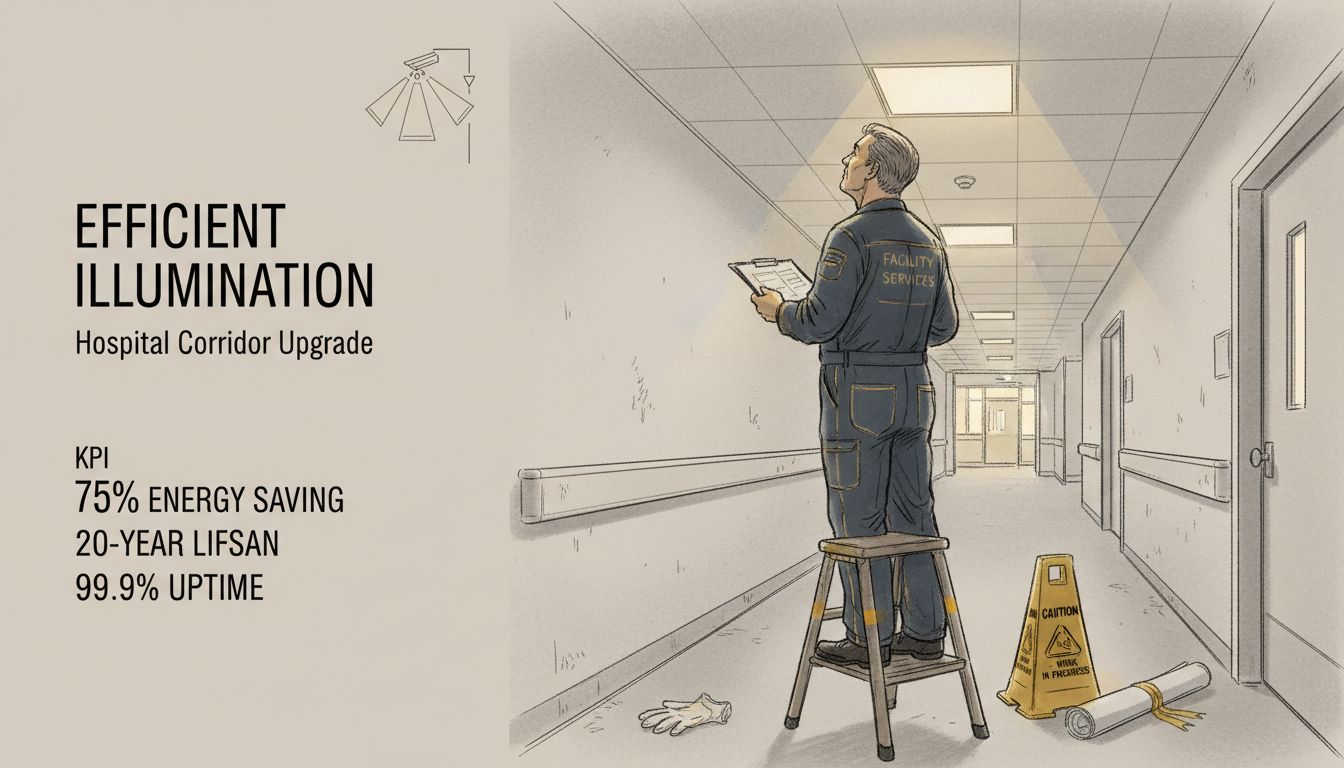
Most British healthcare facilities consume far more energy on lighting than necessary. Outdated or poorly managed systems quietly drain budgets and impact patient care, despite the fact that over 90% of hospital areas still fall short of recommended lighting standards. With rising operational costs, the need for reliable and efficient lighting has never been greater. Tackling these challenges through evidence based strategies helps hospitals cut waste, improve comfort and deliver meaningful benefits to patients and staff.
Table of Contents
Quick Summary
Key Message | Explanation |
1. Conduct Thorough Lighting Assessments | Evaluating existing lighting systems reveals energy-saving opportunities and areas needing improvement, potentially reducing energy consumption by up to 30%. |
2. Implement Reflective Panel Technology | Using reflective panels maximises natural light distribution, potentially cutting electricity use by up to 40% while enhancing patient experiences. |
3. Transition to High-Efficiency LED Lighting | Switching to LED lighting can reduce electricity expenses by up to 70%, with a quick return on investment within 24 months. |
4. Integrate Smart Lighting Controls | Smart systems dynamically adjust lighting, achieving energy savings of about 66% while ensuring optimal conditions for patient care. |
5. Engage Staff in Energy Efficiency | Involving staff through training and recognition fosters a culture of sustainability, amplifying energy conservation efforts across the organisation. |
1. Assess Current Lighting Systems for Efficiency
Determining the energy performance of existing lighting infrastructure is the foundational first step towards creating more sustainable healthcare environments. A comprehensive lighting assessment reveals critical opportunities for reducing energy consumption and improving overall facility efficiency.
Healthcare facilities frequently overlook the substantial energy drain caused by outdated or inefficient lighting systems. A recent observational study in a tertiary care hospital revealed that over 90% of areas had lighting below recommended standards, highlighting the urgent need for systematic evaluations.
To conduct a thorough assessment, healthcare administrators should focus on several key aspects:
Key Assessment Parameters:
Measure existing light intensity across different departments
Evaluate current fixture types and technologies
Calculate energy consumption rates
Identify areas with excessive or insufficient illumination
Document the age and maintenance history of lighting systems
Practical implementation requires a methodical approach. Start by performing a detailed lighting audit using professional measurement tools and energy monitoring equipment. Track illumination levels against healthcare-specific standards, which often differ significantly from standard commercial guidelines.
The potential benefits are substantial. By systematically analysing lighting infrastructure, healthcare facilities can potentially achieve energy savings of up to 30% through targeted upgrades and optimisation strategies. Replacing outdated fixtures with modern LED technologies not only reduces electricity consumption but also improves the overall quality of illumination for patients and medical staff.
“Systematic lighting assessments represent a critical pathway to sustainable healthcare infrastructure.”
Remember that lighting efficiency is not just about reducing costs—it directly impacts patient recovery environments, staff productivity, and overall facility performance. A strategic, data driven approach transforms lighting from a basic utility to a sophisticated tool for enhancing healthcare quality.
2. Maximise Daylight with Reflective Panel Technology
Reflective panel technology represents a groundbreaking approach to enhancing natural light distribution in healthcare environments, transforming how facilities manage illumination and energy consumption. This innovative solution goes beyond traditional lighting strategies by intelligently capturing and redirecting sunlight into interior spaces.
Research exploring daylight integration in deep plan buildings emphasises that strategic reflective technologies can effectively distribute natural light to interior spaces, dramatically improving both energy efficiency and occupant well-being.
Key Benefits of Reflective Panel Technology:
Reduces artificial lighting dependency
Improves patient recovery environments
Enhances staff productivity and mood
Minimises electricity consumption
Creates more sustainable healthcare spaces
The core principle involves using advanced reflective materials and precision engineered panels that capture sunlight from exterior windows and redirect it deep into building interiors. These sophisticated systems analyse sunlight angles, intensity, and environmental conditions to optimise light distribution.
Healthcare administrators can implement this technology by conducting comprehensive assessments of existing architectural layouts. Identifying strategic installation points near patient rooms, corridors, and treatment areas maximises the potential impact. Modern reflective panels can be seamlessly integrated into existing structures without major renovational disruptions.
“Intelligent daylight redirection transforms healthcare environments from sterile spaces into healing ecosystems.”
Potential energy savings are substantial. By reducing artificial lighting requirements, facilities can potentially decrease electricity consumption by up to 40% while simultaneously creating more natural healing environments. The technology not only supports sustainability goals but also directly contributes to improved patient experiences and staff well-being.
3. Switch to High-Efficiency LED Lighting
Transitioning to high-efficiency LED lighting represents a transformative strategy for healthcare facilities seeking substantial energy conservation and improved illumination quality. Modern LED technologies offer unprecedented opportunities to reduce electricity consumption while enhancing environmental sustainability.
A comparative study between LED panels and fluorescent lamps in healthcare examination rooms demonstrated superior energy efficiency and lighting performance, providing compelling evidence for widespread adoption.
Key Advantages of LED Lighting:
Dramatically lower electricity consumption
Extended operational lifespan
Superior colour rendering
Reduced heat generation
Minimal maintenance requirements
Enhanced patient and staff comfort
LED technology operates through semiconductor materials that convert electrical energy directly into light with minimal energy waste. Unlike traditional lighting technologies, LEDs generate significantly less heat and provide more consistent illumination across healthcare environments.
Healthcare administrators can implement LED retrofitting through strategic approaches. Begin by conducting comprehensive lighting audits to identify areas with the greatest potential for energy savings. Prioritise high traffic zones such as corridors, examination rooms, and nursing stations for initial replacements.
“LED lighting transforms healthcare infrastructure from energy consumers to sustainable ecosystems.”
The financial implications are substantial. Healthcare facilities can potentially reduce lighting related electricity expenses by up to 70%, with most LED installations achieving full return on investment within 24 months. Beyond economic benefits, LED technologies support broader organisational goals of environmental responsibility and patient care quality.
4. Integrate Smart Lighting Controls and Sensors
Smart lighting controls represent a revolutionary approach to energy management in healthcare facilities, transforming traditional illumination systems into intelligent adaptive environments. These advanced technologies leverage sophisticated sensors and algorithms to optimise lighting efficiency dynamically.
A groundbreaking study designed an innovative LED light control algorithm using wireless human detection sensors, achieving a remarkable 57% reduction in energy consumption while maintaining critical illumination requirements for patient care and staff performance.
Smart Lighting Control Components:
Occupancy sensors
Daylight harvesting technology
Motion detection systems
Automated dimming controls
Personalised zone management
Real time energy monitoring
The core functionality of smart lighting systems involves continuous environmental assessment. Sophisticated sensors analyse room occupancy, natural light levels, time of day, and specific spatial requirements to adjust illumination automatically. This intelligent approach ensures optimal lighting conditions while minimising unnecessary electricity consumption.
Healthcare administrators can implement these systems through strategic zoning and phased technological integration. Begin by identifying high traffic areas such as corridors, nursing stations, and examination rooms where sensor technologies can generate immediate energy savings.
“Smart lighting transforms passive infrastructure into responsive, energy intelligent ecosystems.”
Research demonstrates potential energy savings approaching 66% without compromising lighting quality or patient comfort. By investing in these advanced technologies, healthcare facilities can simultaneously reduce operational costs, support environmental sustainability goals, and create more adaptive healing environments.
5. Optimise Lighting Schedules for Different Zones
Customising lighting schedules across different healthcare facility zones represents a sophisticated approach to energy management and patient care optimisation. By recognising that each area has unique illumination requirements, administrators can create targeted lighting strategies that enhance efficiency and comfort.
A systematic review investigated the intricate relationships between energy efficiency, lighting control, and environmental design in hospital settings, highlighting the critical importance of adaptive lighting approaches.
Strategic Zoning Considerations:
Patient recovery rooms
Surgical and examination areas
Administrative spaces
Corridors and transition zones
Staff workstations
Public waiting areas
Emergency departments
Each healthcare zone demands a nuanced lighting approach. Patient recovery areas require softer, adjustable illumination that supports circadian rhythms and healing processes. Surgical environments need precise, consistent lighting with minimal variations. Administrative spaces benefit from task oriented illumination that reduces eye strain and supports productivity.
Implementation involves creating granular lighting protocols that respond to specific environmental and functional requirements. Modern lighting management systems can automatically adjust intensity, colour temperature, and distribution based on time of day, occupancy levels, and natural light availability.
“Intelligent lighting schedules transform healthcare environments from static spaces to responsive healing ecosystems.”
By developing zone specific lighting strategies, healthcare facilities can potentially reduce energy consumption by up to 40% while simultaneously improving patient experiences and staff working conditions. The key is viewing lighting not as a uniform utility but as a dynamic, adaptable resource tailored to specific spatial needs.
6. Maintain and Clean Fixtures Regularly
Regular maintenance and cleaning of lighting fixtures represent a critical yet often overlooked strategy for ensuring optimal energy efficiency and illumination quality in healthcare environments. Clean and well maintained lighting systems can significantly enhance performance and reduce long term operational costs.
An observational study in a tertiary care hospital revealed that over 90% of areas had lighting below recommended standards, underscoring the importance of consistent fixture maintenance and cleaning protocols.
Comprehensive Maintenance Checklist:
Remove accumulated dust and debris
Check electrical connections
Inspect for signs of wear or damage
Clean reflective surfaces
Verify fixture alignment
Test sensor and control mechanisms
Replace degraded components promptly
Lighting fixture maintenance involves more than aesthetic cleanliness. Dust and grime accumulation can reduce light output by up to 30%, forcing systems to consume more electricity to maintain desired illumination levels. Regularly cleaned fixtures preserve their light transmission capabilities and prevent premature degradation.
Healthcare facilities should develop structured maintenance schedules tailored to different fixture types and environmental conditions. High traffic areas like surgical suites and corridors require more frequent interventions compared to administrative zones.
“Proactive maintenance transforms lighting from a passive infrastructure to an actively managed resource.”
By implementing systematic cleaning and maintenance protocols, healthcare administrators can extend fixture lifespans, maintain optimal lighting performance, and achieve substantial energy savings. The investment in routine maintenance generates significant returns through improved efficiency and reduced replacement costs.
7. Engage Staff in Energy-Saving Practices
Transforming energy efficiency in healthcare facilities requires more than technological solutions it demands active participation and commitment from staff members. Creating a culture of sustainability can significantly amplify energy conservation efforts across the entire organisation.
A systematic review highlighted that occupant behaviour substantially impacts energy efficiency in hospital settings, demonstrating the critical role of staff engagement in reducing operational energy consumption.
Staff Engagement Strategies:
Provide comprehensive energy awareness training
Develop clear energy saving guidelines
Implement recognition programmes
Create visual energy consumption dashboards
Establish departmental efficiency competitions
Share regular performance feedback
Encourage individual accountability
Successful staff engagement requires a multifaceted approach that combines education, motivation, and transparent communication. Healthcare administrators must transform energy efficiency from an abstract concept into a tangible organisational goal that every team member understands and values.
Organisational culture plays a pivotal role in driving behavioural change. By creating inclusive strategies that empower staff to contribute actively to energy reduction efforts, facilities can unlock significant savings while simultaneously improving workplace satisfaction and environmental responsibility.
“Staff are not just employees they are sustainability champions.”
Implementing gamification techniques such as departmental challenges and visible performance tracking can make energy saving more engaging. Recognising and rewarding departments or individuals who demonstrate exceptional energy conservation practices reinforces positive behaviours and creates a competitive yet collaborative environment.
This table summarises key strategies and considerations for enhancing energy efficiency in healthcare lighting systems, as outlined in the article.
Strategy | Implementation | Expected Results |
Assess Current Lighting Systems | Conduct audits of light intensity, fixture types, and energy consumption. Identify areas for improvement. | Up to 30% energy savings, improved lighting quality. |
Maximise Daylight with Reflective Panels | Use panels to capture and redirect sunlight. Integrate into existing structures without major renovations. | Up to 40% reduction in artificial light dependency, improved patient environments. |
Switch to High-Efficiency LED Lighting | Retrofit facilities with LEDs, prioritising high traffic areas. Conduct thorough audits for maximum savings. | Up to 70% reduction in electricity expenses, better lighting quality. |
Integrate Smart Lighting Controls | Install occupancy sensors, daylight harvesting, and automated dimming. Create responsive environments. | Up to 66% reduction in energy consumption, optimised lighting conditions. |
Optimise Lighting Schedules | Customise schedules for different zones based on specific needs and activity. | Up to 40% energy savings, enhanced patient and staff comfort. |
Maintain and Clean Fixtures Regularly | Develop structured maintenance protocols. Regularly clean and inspect fixtures. | Extended fixture lifespan, improved efficiency, reduced operational costs. |
Engage Staff in Energy-Saving Practices | Provide training, set clear guidelines, and use recognition programmes. Foster a culture of sustainability. | Significant energy conservation, improved organisational engagement. |
Transform Healthcare Lighting with Advanced Daylight Solutions
Healthcare facilities face the challenging need to reduce energy consumption while maintaining superior lighting quality that supports patient recovery and staff well-being. The article highlights critical strategies including maximising daylight, smart lighting controls, and regular maintenance to achieve energy savings without compromising illumination standards. These goals align perfectly with the cutting-edge technology offered by LightMirror.
Our Saaremaa lighthouse | LightMirror 2023 collection features innovative reflective panel systems designed to redirect natural sunlight deep into healthcare interiors. This technology not only cuts reliance on artificial lighting but also creates healthier environments through improved natural light exposure. By integrating AI-driven environmental monitoring and customised architectural solutions, your facility can realistically achieve the article’s reported energy savings potential of up to 40 to 70 percent. Discover how our comprehensive services from feasibility studies to installation support can help transform your lighting infrastructure.
Don’t wait to enhance energy efficiency and patient care simultaneously. Explore more about our sustainable solutions on our main site LightMirror and take the first step towards a greener, healthier healthcare environment today.
Frequently Asked Questions
How can I assess the energy efficiency of our current lighting systems in a healthcare facility?
Assess your current lighting efficiency by conducting a comprehensive lighting audit. Measure light intensity, evaluate fixture types, and calculate energy consumption rates to identify areas for improvement.
What are the benefits of switching to high-efficiency LED lighting in healthcare settings?
Switching to high-efficiency LED lighting significantly reduces electricity consumption, often by up to 70%. Begin by prioritising high-traffic areas for retrofitting to improve illumination quality and sustainability swiftly.
How can reflective panel technology improve natural lighting in our facility?
Reflective panel technology captures and redirects natural sunlight into deeper areas of your facility, reducing reliance on artificial lighting. Implement this by assessing your architectural layout to find optimal installation points, which can enhance energy efficiency and patient comfort significantly.
What are the best strategies for integrating smart lighting controls in healthcare environments?
Integrate smart lighting controls by installing occupancy sensors and automated dimming systems that adjust based on occupancy and natural light levels. Start with high-traffic areas to see immediate energy savings of up to 66% while enhancing patient care.
How frequently should we maintain and clean our lighting fixtures for optimal performance?
Maintaining and cleaning lighting fixtures should be done regularly, ideally creating a structured maintenance schedule based on traffic and fixture type. Ensure fixtures are cleaned to prevent a 30% reduction in light output, ultimately preserving energy efficiency.
What role does staff engagement play in improving energy-saving practices in healthcare facilities?
Staff engagement is crucial for fostering a culture of sustainability. Implement training and recognition programmes to motivate staff, encouraging them to actively participate in energy-saving practices and contribute to significant operational savings.
Recommended
Comments